
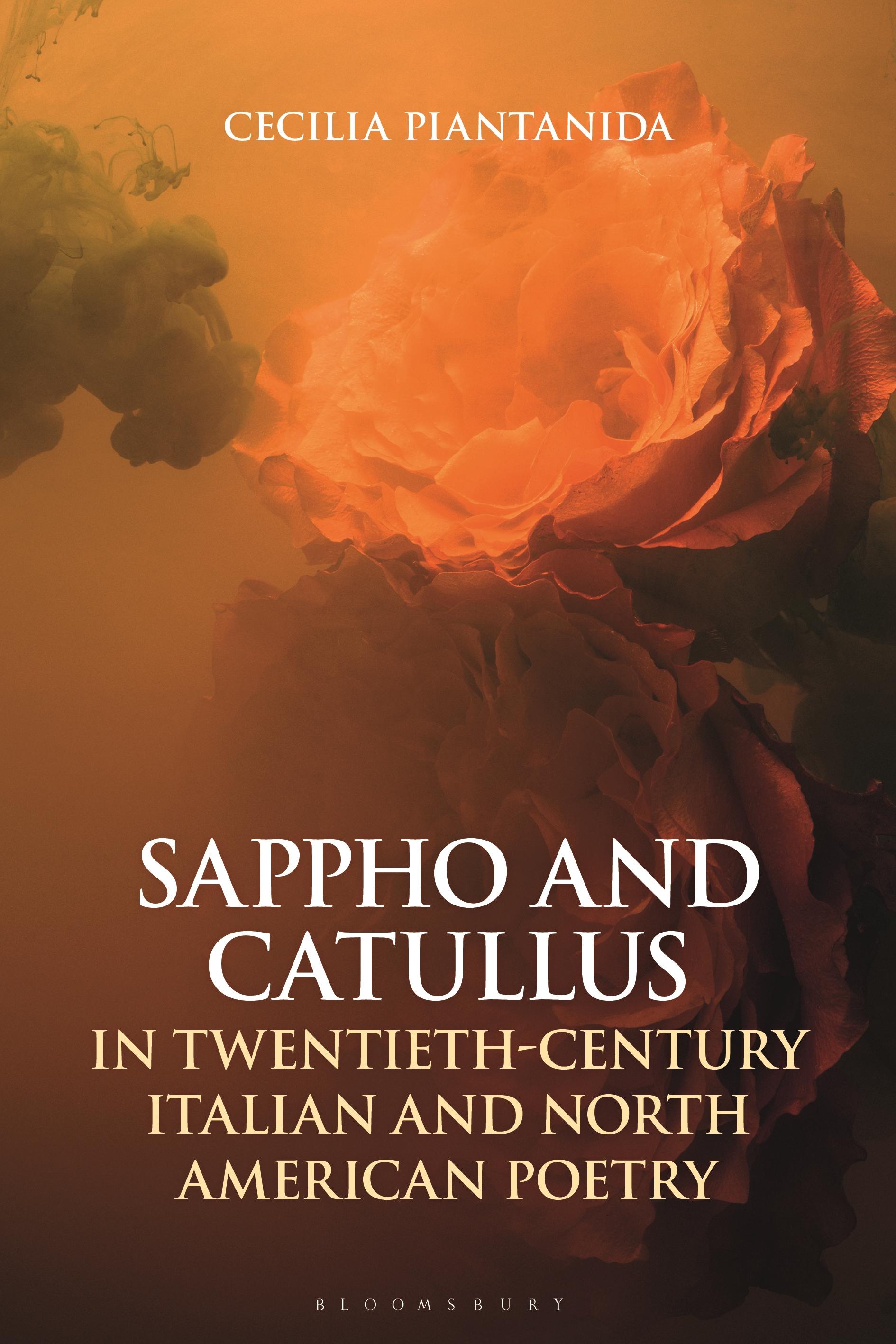
Going beyond exclusively national perspectives, this volume considers the reception of the ancient Greek poet Sappho and her first Latin translator, Catullus, as a literary pair who transmit poetic culture across the world from the early 20th century to the present. Sappho's and Catullus' reception has shaped a transnational network of poets and intellectuals, helping to define ideas of origins, gender, sexuality and national identities.
This book shows that across time and cultures translations and rewritings of Sappho and Catullus articulate modernist poetics of myth and fragmentation, forms of confessionalism and post-modern pastiche. The inquiry focuses on Italian and North American poetry as two central yet understudied hubs of Sappho's and Catullus' modern reception, also linked by a rich mutual intellectual exchange: key case-studies include Giovanni Pascoli, Ezra Pound, H.D., Salvatore Quasimodo, Robert Lowell, Rosita Copioli and Anne Carson, and cover a wide range of unpublished archival material. Texts are analysed and compared through reception and translation theories and inserted within the current debate on the Classics as World Literature, demonstrating how sustained transnational poetic discourse employs the ancient pair to expand notions of literary origins and redefine poetry's relationship to human existence.
This book shows that across time and cultures translations and rewritings of Sappho and Catullus articulate modernist poetics of myth and fragmentation, forms of confessionalism and post-modern pastiche. The inquiry focuses on Italian and North American poetry as two central yet understudied hubs of Sappho's and Catullus' modern reception, also linked by a rich mutual intellectual exchange: key case-studies include Giovanni Pascoli, Ezra Pound, H.D., Salvatore Quasimodo, Robert Lowell, Rosita Copioli and Anne Carson, and cover a wide range of unpublished archival material. Texts are analysed and compared through reception and translation theories and inserted within the current debate on the Classics as World Literature, demonstrating how sustained transnational poetic discourse employs the ancient pair to expand notions of literary origins and redefine poetry's relationship to human existence.
Pay easily by card, Klarna, Apple Pay or Google Pay. Not happy? You always have a 14-day money-back guarantee. Read more in our terms. If you have any questions, email us at hello@memmo.org.
Memmo makes studying easier – wherever you are in the world. We bring your course books and smart study tools together in one place: summaries, quizzes, podcasts and flashcards. Plus Ted, your study buddy who answers anything you wonder. Over 50,000 students already study here – built to help you learn faster and stress less.