
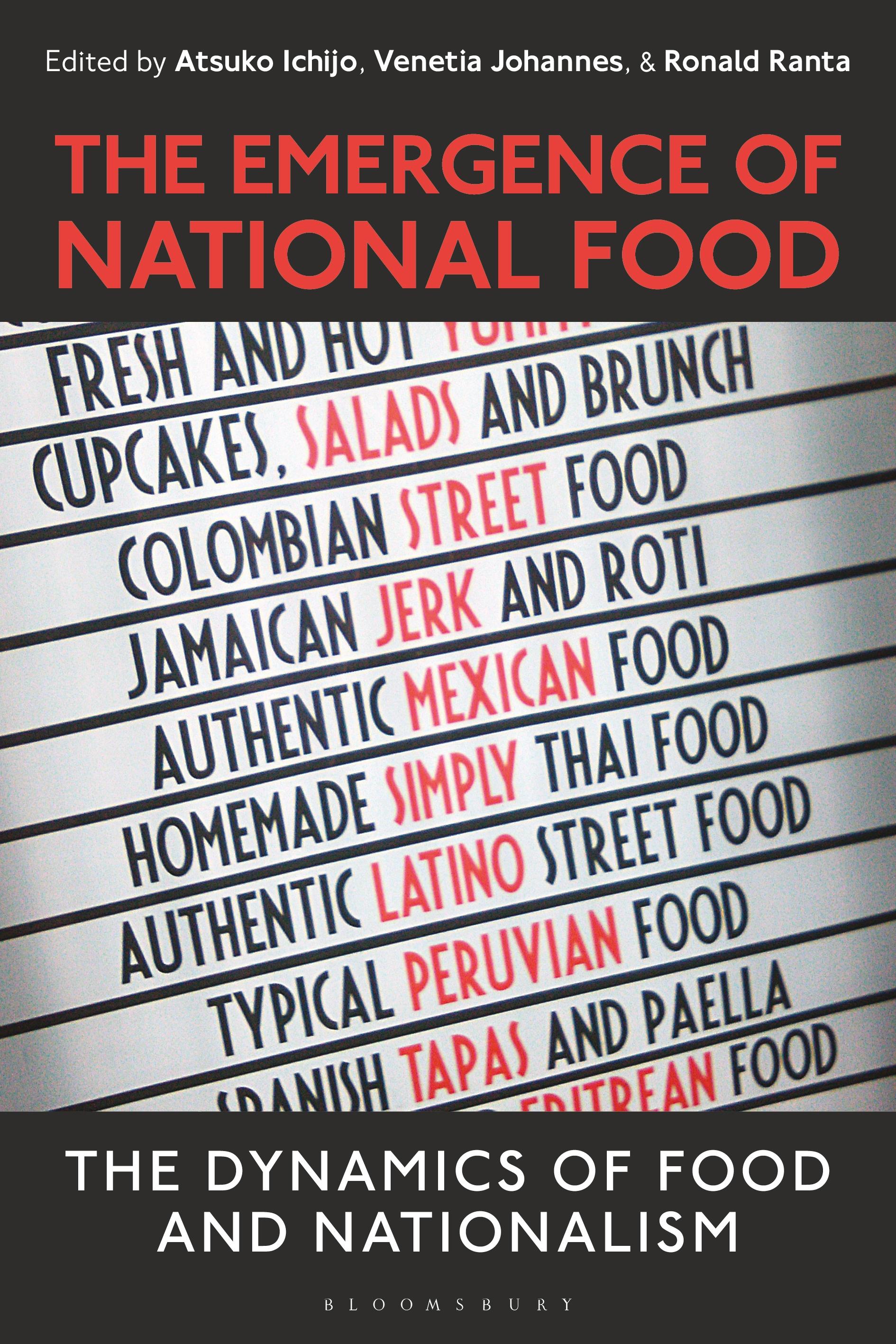
What do deep fried mars bars, cod, and Bulgarian yoghurt have in common? Each have become symbolic foods with specific connotations, located to a very specific place and country.
This book explores the role of food in society as a means of interrogating the concept of the nation-state and its sub-units, and reveals how the nation-state in its various disguises has been and is changing in response to accelerated globalisation. The chapters investigate various stages of national food: its birth, emergence, and decline, and why sometimes no national food emerges. By collecting and analysing a wide range of case studies from countries including Portugal, Mexico, the USA, Bulgaria, Scotland, and Israel, the book illustrates ways in which various social forces work together to shape social and political realities concerning food.
The contributors, hailing from anthropology, history, sociology and political science, investigate the significance of specific food cultures, cuisines, dishes, and ingredients, and their association with national identity. In so doing, it becomes clearer how these two things interact, and demonstrates the scope and direction of the current study of food and nationalism.
This book explores the role of food in society as a means of interrogating the concept of the nation-state and its sub-units, and reveals how the nation-state in its various disguises has been and is changing in response to accelerated globalisation. The chapters investigate various stages of national food: its birth, emergence, and decline, and why sometimes no national food emerges. By collecting and analysing a wide range of case studies from countries including Portugal, Mexico, the USA, Bulgaria, Scotland, and Israel, the book illustrates ways in which various social forces work together to shape social and political realities concerning food.
The contributors, hailing from anthropology, history, sociology and political science, investigate the significance of specific food cultures, cuisines, dishes, and ingredients, and their association with national identity. In so doing, it becomes clearer how these two things interact, and demonstrates the scope and direction of the current study of food and nationalism.
Pages: 224
Category: Kultur-, Genus- & Postkoloniala studier
e-ISBN: 9781350074156
Shipping weight: 1.2 kg
Ships in: 1-2 days
Pay easily by card, Klarna, Apple Pay or Google Pay. Not happy? You always have a 14-day money-back guarantee. Read more in our terms. If you have any questions, email us at hello@memmo.org.
Memmo makes studying easier – wherever you are in the world. We bring your course books and smart study tools together in one place: summaries, quizzes, podcasts and flashcards. Plus Ted, your study buddy who answers anything you wonder. Over 50,000 students already study here – built to help you learn faster and stress less.