
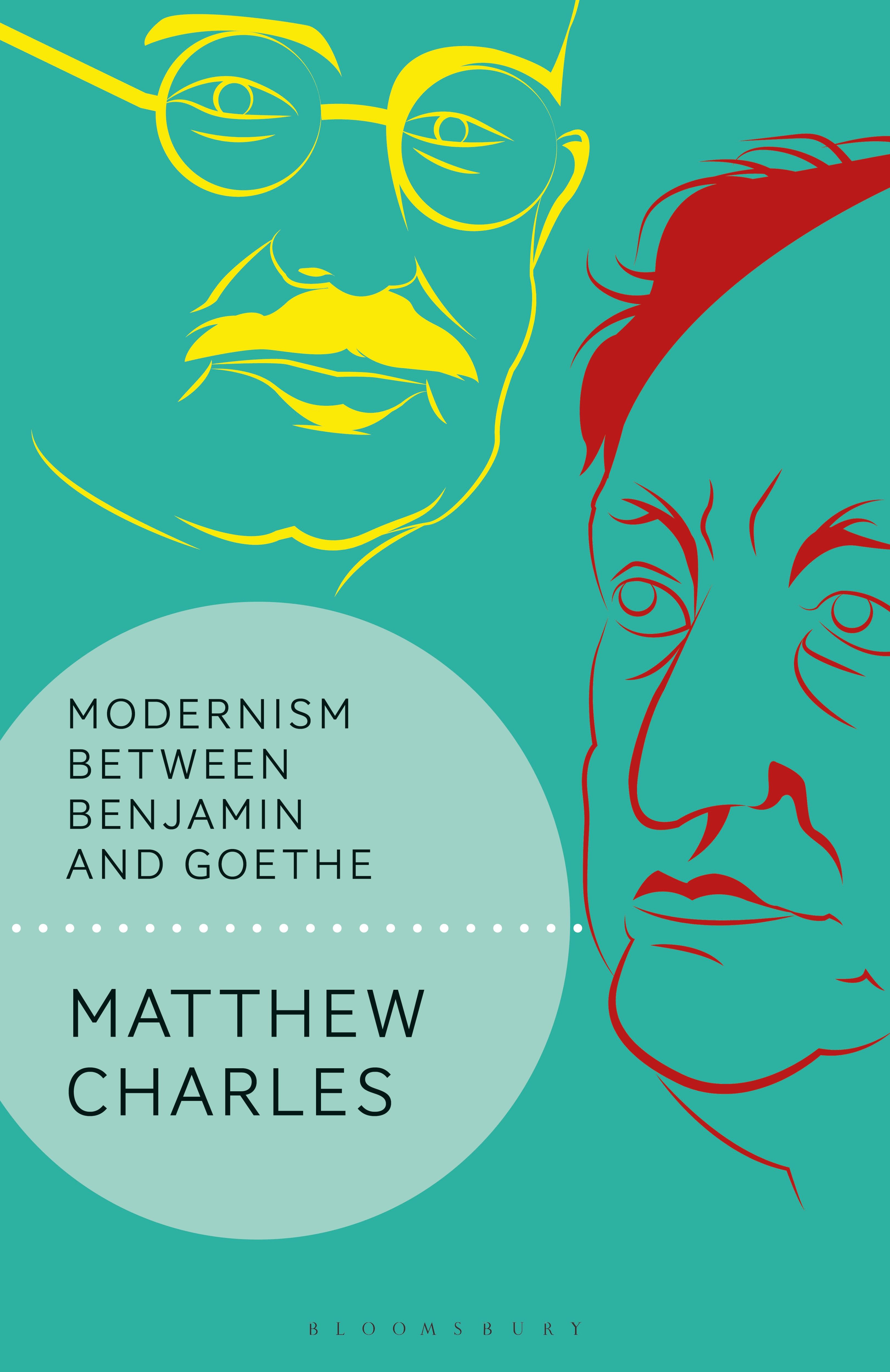
Widely regarded as one of the foremost cultural critics of the last century, Walter Benjamin's relation to Modernism has largely been understood in the context of his reception of the aesthetic theories of Early German Romanticism and his associated interest in avant-garde Surrealism. But this Romantic understanding only gives half the picture.
Running through Benjamin's thought is also a critique of Romanticism, developed in conjunction with a positive engagement with the philosophical, artistic and historical writings of J. W. von Goethe. In demonstrating the significance of these Goethean elements, this book challenges the dominant understanding of Benjamin's philosophy as essentially Romantic and instead proposes that Goethe's Classicism, conceived as the counterpoint to Romanticism, permits a corrective to the latter's deficiencies. Benjamin's Modernist concept of criticism, it is argued, is constituted in the movement between these polarities of Romanticism and Classicism.
Conversely, placing Goethe's Classicism in relation to Benjamin's practice of literary criticism reveals historical tensions with Romanticism that constitute the untimely – indeed, it will be argued, cinematic – Modernism of his work. Adopting a transcritical approach, this book alternates between Benjamin and Goethe in relation to the experiences of colour, language and technology, assembling a constellation of philosophical and artistic figures between them, including the writings of Kant, Nietzsche, Cohen, Deleuze, Koselleck, Klages, and the work of Grünewald, Marées, Klee, Turner, Hulme, Eisenstein, Tretyakov, and Murnau.
Running through Benjamin's thought is also a critique of Romanticism, developed in conjunction with a positive engagement with the philosophical, artistic and historical writings of J. W. von Goethe. In demonstrating the significance of these Goethean elements, this book challenges the dominant understanding of Benjamin's philosophy as essentially Romantic and instead proposes that Goethe's Classicism, conceived as the counterpoint to Romanticism, permits a corrective to the latter's deficiencies. Benjamin's Modernist concept of criticism, it is argued, is constituted in the movement between these polarities of Romanticism and Classicism.
Conversely, placing Goethe's Classicism in relation to Benjamin's practice of literary criticism reveals historical tensions with Romanticism that constitute the untimely – indeed, it will be argued, cinematic – Modernism of his work. Adopting a transcritical approach, this book alternates between Benjamin and Goethe in relation to the experiences of colour, language and technology, assembling a constellation of philosophical and artistic figures between them, including the writings of Kant, Nietzsche, Cohen, Deleuze, Koselleck, Klages, and the work of Grünewald, Marées, Klee, Turner, Hulme, Eisenstein, Tretyakov, and Murnau.
Pages: 240
Category: Litteraturvetenskap & Teori
e-ISBN: 9781350013957
Shipping weight: 1.2 kg
Ships in: 1-2 days
Pay easily by card, Klarna, Apple Pay or Google Pay. Not happy? You always have a 14-day money-back guarantee. Read more in our terms. If you have any questions, email us at hello@memmo.org.
Memmo makes studying easier – wherever you are in the world. We bring your course books and smart study tools together in one place: summaries, quizzes, podcasts and flashcards. Plus Ted, your study buddy who answers anything you wonder. Over 50,000 students already study here – built to help you learn faster and stress less.