
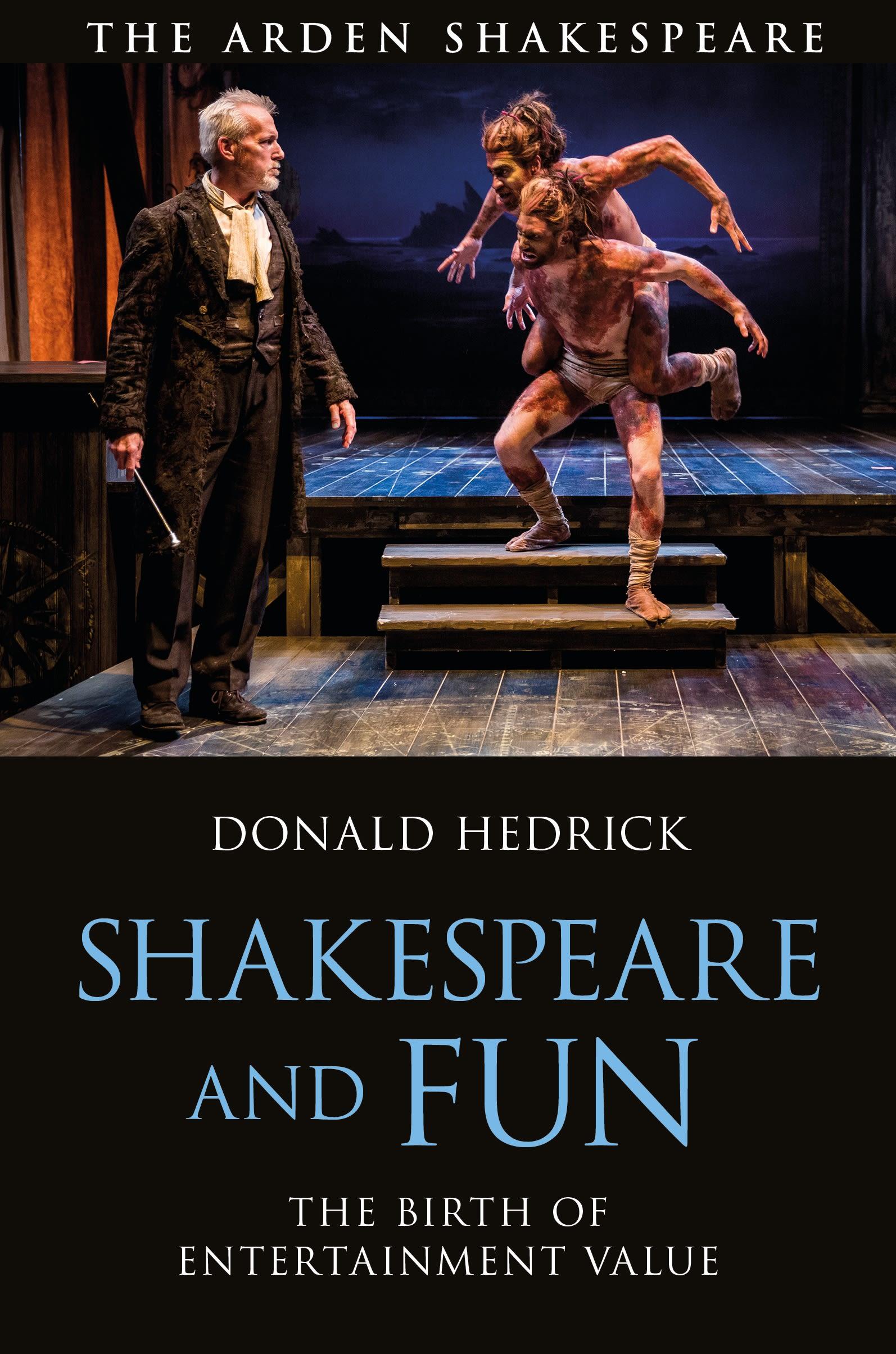
In this bold, original study Hedrick proposes an early modern 'entertainment value' revolution, to which Shakespeare contributed and in which he played a competitive role.
As London's nascent capitalist industry developed and the variety of entertainments proliferated, theatre contributes to the birth of entertainment value and a commercial trajectory toward what Marxist critic Adorno theorizes as 'fun,' seen contemporaneously in LasVegasization and the election of Donald Trump to U.S. Presidency.
In this innovative approach to Shakespeare's plays through their compulsory, competitive relation to other choices from London's entertainment industry, such as sex work and gaming, Hedrick recovers a coherent internal dynamic of theatre's 'pleasure enclosure' accompanying the revolutionary logic of capital's new cultural and economic extremes.
Applying these relations to original, insightful readings of A Midsummer Night's Dream, The Winter's Tale, and The Taming of the Shrew, Hedrick draws from cultural studies, contemporary and personal parallels, wide-ranging historical materials, and political theory. These include: the semantic shifts in keywords of pleasure, the practice of betting on actors, the psychology of paying admission before an entertainment, and various 'reality shows' such as contests of prose and verse. Continual insights emerge, both broad and specific: from ten 'entertainment value axioms' to Shakespeare's awareness of entertainment value's birth at moments in his late plays, marking a logic of value crisis, bubbles, and the danger of 'too much fun.'
As London's nascent capitalist industry developed and the variety of entertainments proliferated, theatre contributes to the birth of entertainment value and a commercial trajectory toward what Marxist critic Adorno theorizes as 'fun,' seen contemporaneously in LasVegasization and the election of Donald Trump to U.S. Presidency.
In this innovative approach to Shakespeare's plays through their compulsory, competitive relation to other choices from London's entertainment industry, such as sex work and gaming, Hedrick recovers a coherent internal dynamic of theatre's 'pleasure enclosure' accompanying the revolutionary logic of capital's new cultural and economic extremes.
Applying these relations to original, insightful readings of A Midsummer Night's Dream, The Winter's Tale, and The Taming of the Shrew, Hedrick draws from cultural studies, contemporary and personal parallels, wide-ranging historical materials, and political theory. These include: the semantic shifts in keywords of pleasure, the practice of betting on actors, the psychology of paying admission before an entertainment, and various 'reality shows' such as contests of prose and verse. Continual insights emerge, both broad and specific: from ten 'entertainment value axioms' to Shakespeare's awareness of entertainment value's birth at moments in his late plays, marking a logic of value crisis, bubbles, and the danger of 'too much fun.'
Pay easily by card, Klarna, Apple Pay or Google Pay. Not happy? You always have a 14-day money-back guarantee. Read more in our terms. If you have any questions, email us at hello@memmo.org.
Memmo makes studying easier – wherever you are in the world. We bring your course books and smart study tools together in one place: summaries, quizzes, podcasts and flashcards. Plus Ted, your study buddy who answers anything you wonder. Over 50,000 students already study here – built to help you learn faster and stress less.