
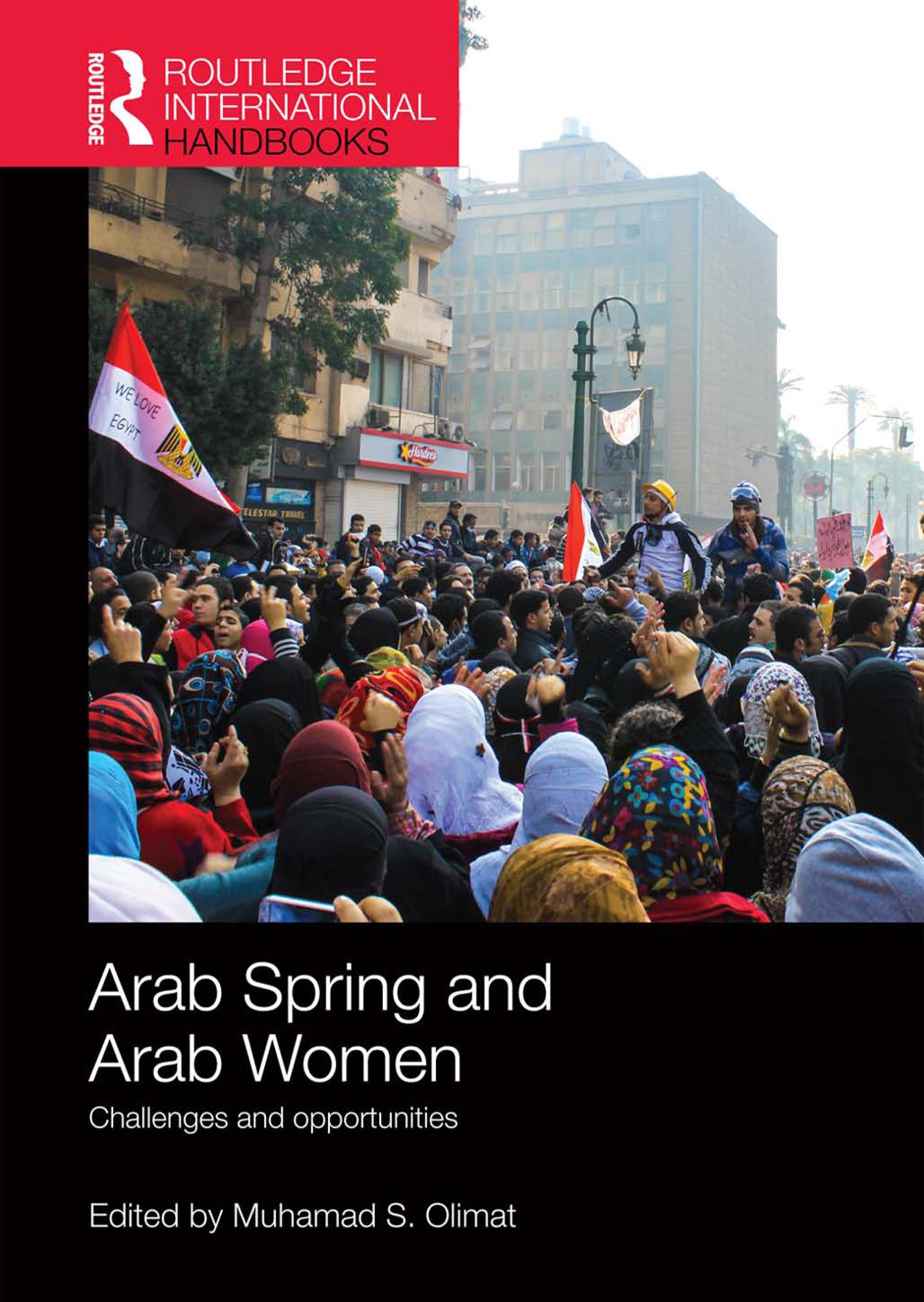
This volume examines the role of Arab women in Arab Spring and their contribution to the ongoing process of change sweeping the region. The book begins with an examination of the process of democratization and its impediments in the Arab World since the Second World War. It then looks at the conditions that led to the upsurge of the so-called Arab Spring. Finally, it underscores women’s role as participants, organizers, leaders, but also as victims.
The main thesis of the book is that while Arab women were an integral part of the revolutionary efforts within the Arab Spring paradigm, they did not benefit from their sacrifices. Although they continue to be part of the process of change, their gains, rights and scope for participation are still limited. If the expansion of women’s participation and the scope of their rights do not seem to be a priority for revolutionary forces, women have made remarkable achievements, especially in some Arab Spring countries such as Yemen and Libya.
The book includes case studies of some Arab Spring countries and other countries influenced by developments: Egypt, Bahrain, Kuwait, Libya, Yemen, Algeria, Jordan, Morocco and Saudi Arabia. It calls on revolutionary and reformist forces to give special attention to issues related to Arab women, as they are an indispensable pillar in the process of reform, development, peace and stability in the Middle East.
Pay easily by card, Klarna, Apple Pay or Google Pay. Not happy? You always have a 14-day money-back guarantee. Read more in our terms. If you have any questions, email us at hello@memmo.org.
Memmo makes studying easier – wherever you are in the world. We bring your course books and smart study tools together in one place: summaries, quizzes, podcasts and flashcards. Plus Ted, your study buddy who answers anything you wonder. Over 50,000 students already study here – built to help you learn faster and stress less.