
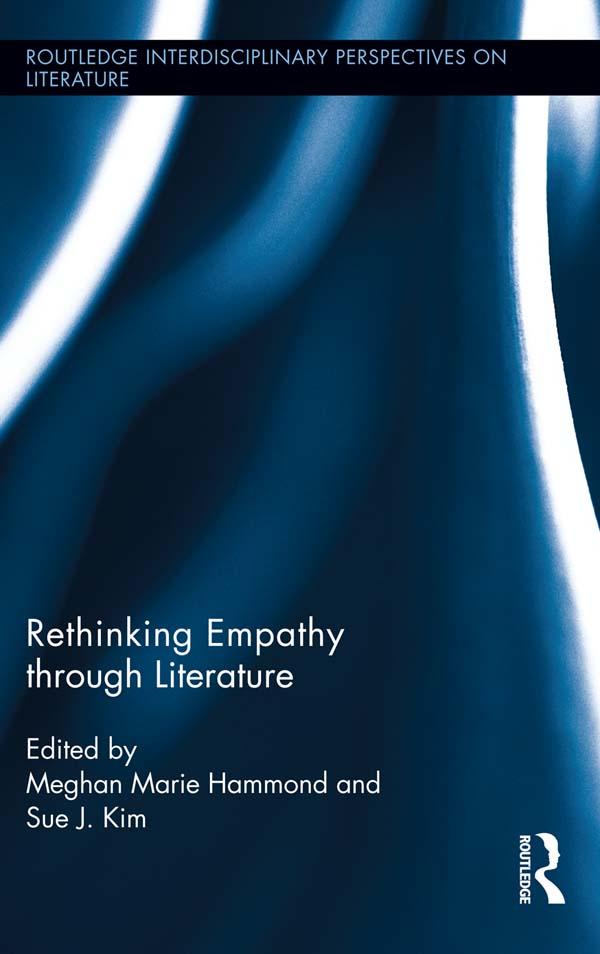
In recent years, a growing field of empathy studies has started to emerge from several academic disciplines, including neuroscience, social psychology, and philosophy. Because literature plays a central role in discussions of empathy across disciplines, reconsidering how literature relates to "feeling with" others is key to rethinking empathy conceptually. This collection challenges common understandings of empathy, asking readers to question what it is, how it works, and who is capable of performing it. The authors reveal the exciting research on empathy that is currently emerging from literary studies while also making productive connections to other areas of study such as psychology and neurobiology.
While literature has been central to discussions of empathy in divergent disciplines, the ways in which literature is often thought to relate to empathy can be simplistic and/or problematic. The basic yet popular postulation that reading literature necessarily produces empathy and pro-social moral behavior greatly underestimates the complexity of reading, literature, empathy, morality, and society. Even if empathy were a simple neurological process, we would still have to differentiate the many possible kinds of empathy in relation to different forms of art. All the complexities of literary and cultural studies have still to be brought to bear to truly understand the dynamics of literature and empathy.
Pay easily by card, Klarna, Apple Pay or Google Pay. Not happy? You always have a 14-day money-back guarantee. Read more in our terms. If you have any questions, email us at hello@memmo.org.
Memmo makes studying easier – wherever you are in the world. We bring your course books and smart study tools together in one place: summaries, quizzes, podcasts and flashcards. Plus Ted, your study buddy who answers anything you wonder. Over 50,000 students already study here – built to help you learn faster and stress less.