
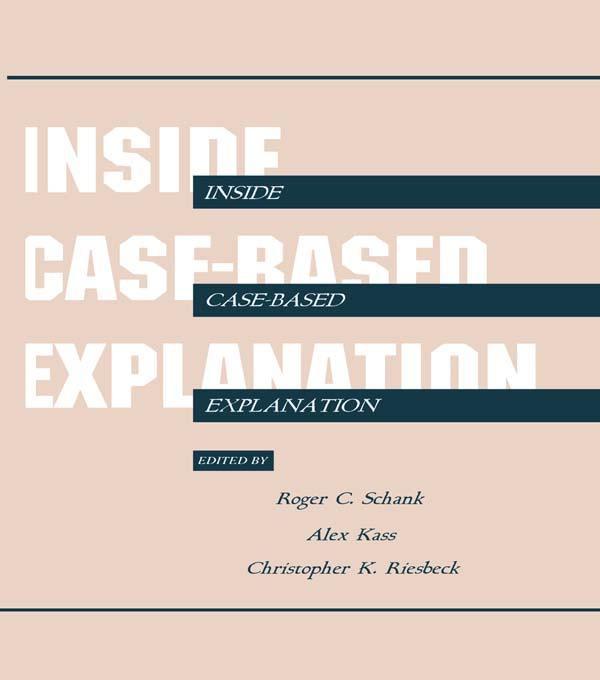
This book is the third volume in a series that provides a hands-on perspective on the evolving theories associated with Roger Schank and his students. The primary focus of this volume is on constructing explanations. All of the chapters relate to the problem of building computer programs that can develop hypotheses about what might have caused an observed event. Because most researchers in natural language processing don't really want to work on inference, memory, and learning issues, most of their sample text fragments are chosen carefully to de-emphasize the need for non text-related reasoning.
The ability to come up with hypotheses about what is really going on in a story is a hallmark of human intelligence. The biggest difference between truly intelligent readers and less intelligent ones is the extent to which the reader can go beyond merely understanding the explicit statements being communicated. Achieving a creative level of understanding means developing hypotheses about questions for which there may be no conclusively correct answer at all. The focus of the lab, during the period documented in this book, was to work on getting a computer program to do that.
The volume adopts a case-based approach to the construction of explanations which suggests that the main steps in the process of explaining a given anomaly are as follows:
* Retrieve an explanation that might be relevant to the anomaly.
* Evaluate whether the retrieved explanation makes sense when applied to the current anomaly.
* Adapt the explanation to produce a new variant that fits better if the retrieved explanation doesn't fit the anomaly perfectly.
Pay easily by card, Klarna, Apple Pay or Google Pay. Not happy? You always have a 14-day money-back guarantee. Read more in our terms. If you have any questions, email us at hello@memmo.org.
Memmo makes studying easier – wherever you are in the world. We bring your course books and smart study tools together in one place: summaries, quizzes, podcasts and flashcards. Plus Ted, your study buddy who answers anything you wonder. Over 50,000 students already study here – built to help you learn faster and stress less.