
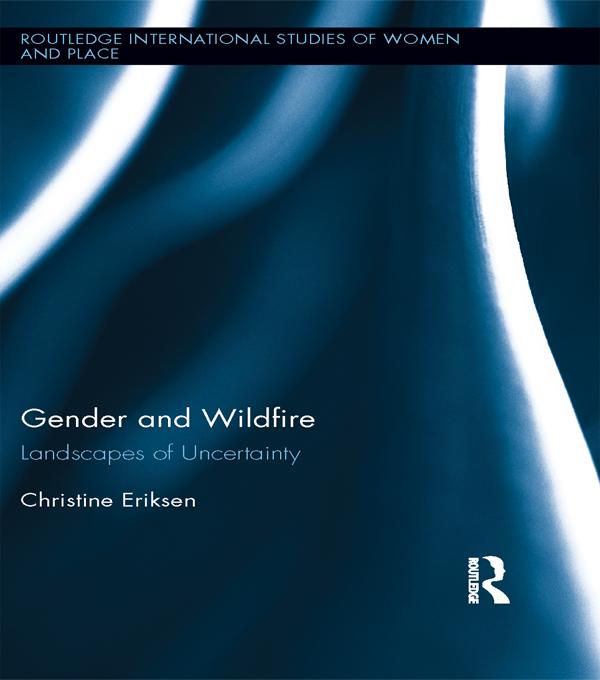
In pursuit of lifestyle change, affordable property, and proximity to nature, people from all walks of life are moving to the wildland-urban interface. Tragic wildfires and a predicted increase in high fire danger weather with climate change have triggered concern for the safety of such amenity-led migrants in wildfire-prone landscapes.
This book examines wildfire awareness and preparedness amongst women, men, households, communities and agencies at the interface between city and beyond. It does so through an examination of two regions where wildfires are common and disastrous, and where how to deal with them is a major political issue: southeast Australia and the west coast United States. It follows women’s and men’s stories of surviving, fighting, evacuating, living and working with wildfire to reveal the intimate inner workings of wildfire response – and especially the culturally and historically distinct gender relations that underpin wildfire resilience.
Wildfire is revealed as much more than a "natural" hazard – it is far from gender-neutral. Rather, wildfire is an important means through which traditional gender roles and power relations are maintained despite changing social circumstances. Women’s and men’s subjectivities are shaped by varying senses of inclusion, exclusion, engagement and disengagement with wildfire management. This leads to the reproduction of gender identities with clear ramifications for if, how and to what extent women and men prepare for wildfire.
Pay easily by card, Klarna, Apple Pay or Google Pay. Not happy? You always have a 14-day money-back guarantee. Read more in our terms. If you have any questions, email us at hello@memmo.org.
Memmo makes studying easier – wherever you are in the world. We bring your course books and smart study tools together in one place: summaries, quizzes, podcasts and flashcards. Plus Ted, your study buddy who answers anything you wonder. Over 50,000 students already study here – built to help you learn faster and stress less.