
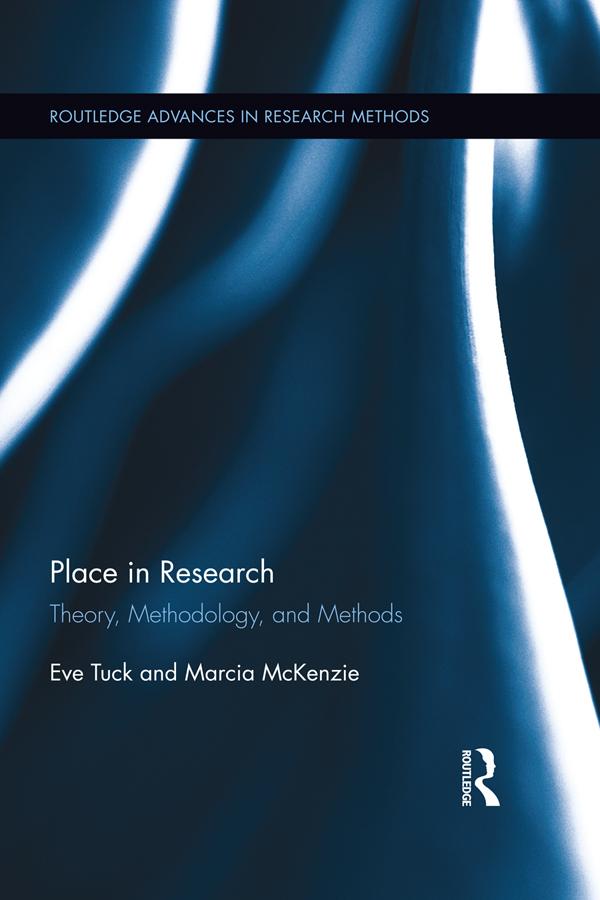
Bridging environmental and Indigenous studies and drawing on critical geography, spatial theory, new materialist theory, and decolonizing theory, this dynamic volume examines the sometimes overlooked significance of place in social science research. There are often important divergences and even competing logics at work in these areas of research, some which may indeed be incommensurable. This volume explores how researchers around the globe are coming to terms - both theoretically and practically - with place in the context of settler colonialism, globalization, and environmental degradation. Tuck and McKenzie outline a trajectory of critical place inquiry that not only furthers empirical knowledge, but ethically imagines new possibilities for collaboration and action.
Critical place inquiry can involve a range of research methodologies; this volume argues that what matters is how the chosen methodology engages conceptually with place in order to mobilize methods that enable data collection and analyses that address place explicitly and politically. Unlike other approaches that attempt to superficially tag on Indigenous concerns, decolonizing conceptualizations of land and place and Indigenous methods are central, not peripheral, to practices of critical place inquiry.
Pay easily by card, Klarna, Apple Pay or Google Pay. Not happy? You always have a 14-day money-back guarantee. Read more in our terms. If you have any questions, email us at hello@memmo.org.
Memmo makes studying easier – wherever you are in the world. We bring your course books and smart study tools together in one place: summaries, quizzes, podcasts and flashcards. Plus Ted, your study buddy who answers anything you wonder. Over 50,000 students already study here – built to help you learn faster and stress less.