
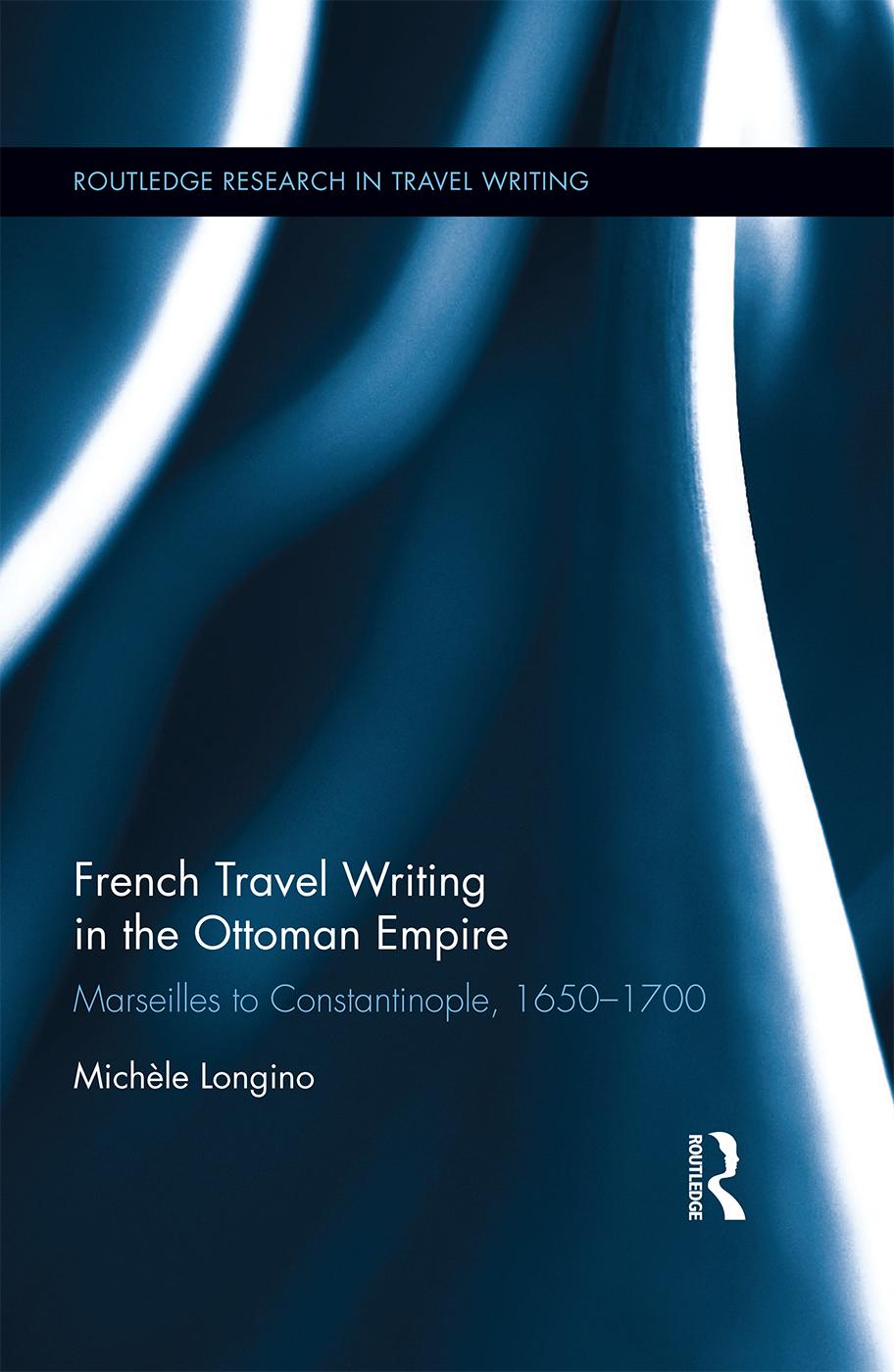
Examining the history of the French experience of the Ottoman world and Turkey, this comparative study visits the accounts of early modern travelers for the insights they bring to the field of travel writing. The journals of contemporaries Jean-Baptiste Tavernier, Jean Thévenot, Laurent D’Arvieux, Guillaume-Joseph Grelot, Jean Chardin, and Antoine Galland reveal a rich corpus of political, social, and cultural elements relating to the Ottoman Empire at the time, enabling an appreciation of the diverse shapes that travel narratives can take at a distinct historical juncture. Longino examines how these writers construct themselves as authors, characters, and individuals in keeping with the central human project of individuation in the early modern era, also marking the differences that define each of these travelers – the shopper, the envoy, the voyeur, the arriviste, the ethnographer, the merchant. She shows how these narratives complicate and alter political and cultural paradigms in the fields of Mediterranean studies, 17th-century French studies, and cultural studies, arguing for their importance in the canon of early modern narrative forms, and specifically travel writing. The first study to examine these travel journals and writers together, this book will be of interest to a range of scholars covering travel writing, French literature, and history.
Pay easily by card, Klarna, Apple Pay or Google Pay. Not happy? You always have a 14-day money-back guarantee. Read more in our terms. If you have any questions, email us at hello@memmo.org.
Memmo makes studying easier – wherever you are in the world. We bring your course books and smart study tools together in one place: summaries, quizzes, podcasts and flashcards. Plus Ted, your study buddy who answers anything you wonder. Over 50,000 students already study here – built to help you learn faster and stress less.