
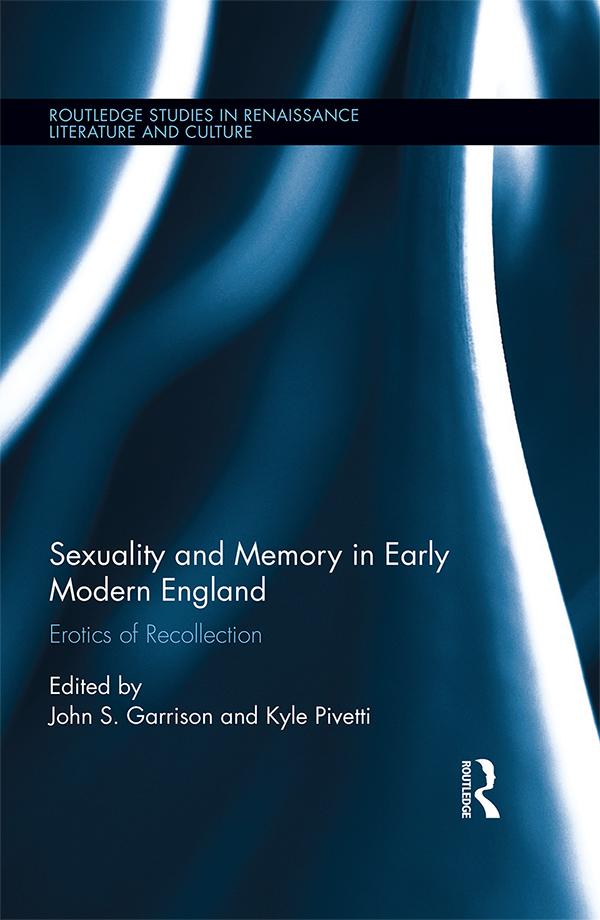
This volume brings together two vibrant areas of Renaissance studies today: memory and sexuality. The contributors show that not only Shakespeare but also a broad range of his contemporaries were deeply interested in how memory and sexuality interact. Are erotic experiences heightened or deflated by the presence of memory? Can a sexual act be commemorative? Can an act of memory be eroticized? How do forms of romantic desire underwrite forms of memory? To answer such questions, these authors examine drama, poetry, and prose from both major authors and lesser-studied figures in the canon of Renaissance literature. Alongside a number of insightful readings, they show that sonnets enact a sexual exchange of memory; that epics of nationhood cannot help but eroticize their subjects; that the act of sex in Renaissance tragedy too often depends upon violence of the past. Memory, these scholars propose, re-shapes the concerns of queer and sexuality studies – including the unhistorical, the experience of desire, and the limits of the body. So too does the erotic revise the dominant trends of memory studies, from the rhetoric of the medieval memory arts to the formation of collective pasts.
Pay easily by card, Klarna, Apple Pay or Google Pay. Not happy? You always have a 14-day money-back guarantee. Read more in our terms. If you have any questions, email us at hello@memmo.org.
Memmo makes studying easier – wherever you are in the world. We bring your course books and smart study tools together in one place: summaries, quizzes, podcasts and flashcards. Plus Ted, your study buddy who answers anything you wonder. Over 50,000 students already study here – built to help you learn faster and stress less.