
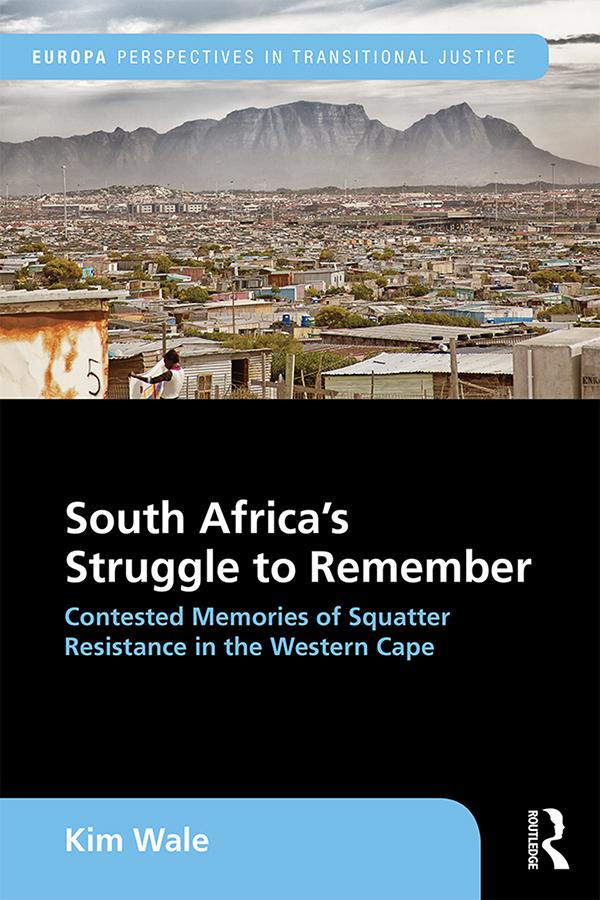
Transitional justice studies typically focuses on how nations remember, face and deal with histories of past violence. This book, however, shifts the frame from national discourses of transitional justice onto local memory actors who attempt to engage with these broader systems of meaning from below. The case study is based on the memory struggles of individuals and groups who are attempting to gain access to the discourses and benefits associated with dominant memory identities of ‘victim’ and ‘veteran’ in the context of post-transition South Africa. They share a common history of squatter resistance in the Western Cape in the 1980s and a common struggle for inclusion in dominant memory frameworks.
The main theme of this book is the politics of memory, as it relates to the conversation between national and local memory. Integrated within this theme is the further theme of alternative histories and counter-memories of struggle from below. In focusing on counter memories of violence and transition this book aims to tell a different version of South African liberation history in relation to the dominant narrative. It analyses local memory actors' attempts to bring their lived histories into conversation with national discourses of reconciliation and the national liberation struggle. In doing so it unpacks a memory paradox occurring within these narratives, which highlights the politics of inclusion and exclusion within the frames of transitional justice knowledge. On the one hand this alternate story exposes the paradox between local and national memory while on the other hand it brings into focus the local experience of the intersection between international transitional justice discourses and national transition politics.
This book will be of local and international interest to scholars and students in the field of transitional justice, memory politics, national liberation struggle and South African historiography. It will also be of interest to a broader South Africa public, as it offers a deeper understanding of South Africa’s history, which challenges taken for granted transitional justice frames of knowledge.
Pay easily by card, Klarna, Apple Pay or Google Pay. Not happy? You always have a 14-day money-back guarantee. Read more in our terms. If you have any questions, email us at hello@memmo.org.
Memmo makes studying easier – wherever you are in the world. We bring your course books and smart study tools together in one place: summaries, quizzes, podcasts and flashcards. Plus Ted, your study buddy who answers anything you wonder. Over 50,000 students already study here – built to help you learn faster and stress less.