
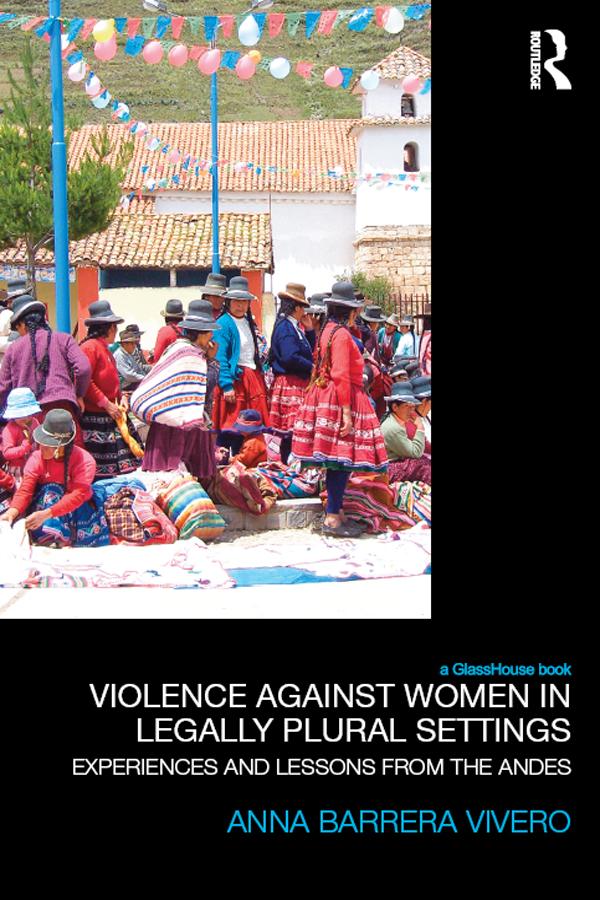
This book addresses a growing area of concern for scholars and development practitioners: discriminatory gender norms in legally plural settings. Focusing specifically on indigenous women, this book analyses how they, often in alliance with supporters and allies, have sought to improve their access to justice. Development practitioners working in the field of access to justice have tended to conceive indigenous legal systems as either inherently incompatible with women’s rights or, alternatively, they have emphasised customary law’s advantageous features, such as its greater accessibility, familiarity and effectiveness. Against this background – and based on a comparison of six thus far underexplored initiatives of legal and institutional change in Ecuador, Peru, and Bolivia – Anna Barrera Vivero provides a more nuanced, ethnographic, understanding of how women navigate through context-specific constellations of interlegality in their search for justice. In so doing, moreover, her account of ongoing political debates and local struggles for gender justice grounds the elaboration of a comprehensive conceptual framework for understanding the legally plural dynamics involved in the contestation of discriminatory gender norms.
Pay easily by card, Klarna, Apple Pay or Google Pay. Not happy? You always have a 14-day money-back guarantee. Read more in our terms. If you have any questions, email us at hello@memmo.org.
Memmo makes studying easier – wherever you are in the world. We bring your course books and smart study tools together in one place: summaries, quizzes, podcasts and flashcards. Plus Ted, your study buddy who answers anything you wonder. Over 50,000 students already study here – built to help you learn faster and stress less.