
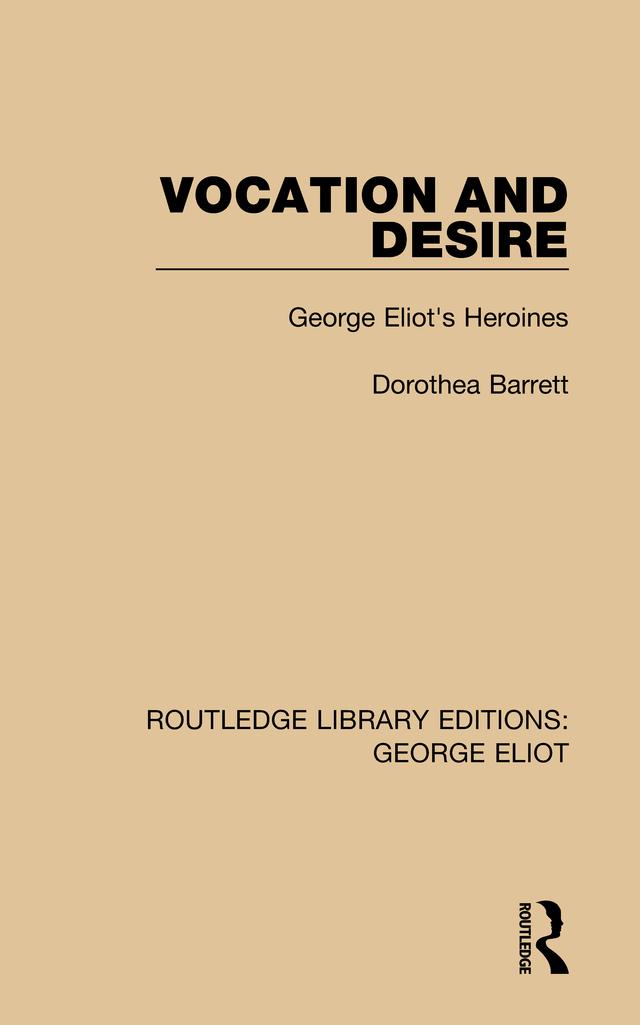
First published in 1989. Generations of critics have seen George Eliot as a conservative Victorian high moralist and sybil. Vocation and Desire questions that image, and finds in her work elements of anger, feminism, subversiveness, revenge, iconoclasm, wit, and eroticism – elements that we have been taught not to expect. After looking at the development of the sybilline image and the gradual eclipse of the subversive George Eliot – which Eliot herself initiated – Dorothea Barrett goes on to investigate the evidence of the novels themselves and finds an alternative emphasis. Her study of the heroines of the six major novels and issues of language and desire provides a refreshing and acute analysis of the contradictions and strengths of Eliot’s work. She also considers the reception of George Eliot by feminist critics and the broader implications of her work for contemporary feminism. This title will be of interest to students of literature.
Pay easily by card, Klarna, Apple Pay or Google Pay. Not happy? You always have a 14-day money-back guarantee. Read more in our terms. If you have any questions, email us at hello@memmo.org.
Memmo makes studying easier – wherever you are in the world. We bring your course books and smart study tools together in one place: summaries, quizzes, podcasts and flashcards. Plus Ted, your study buddy who answers anything you wonder. Over 50,000 students already study here – built to help you learn faster and stress less.