
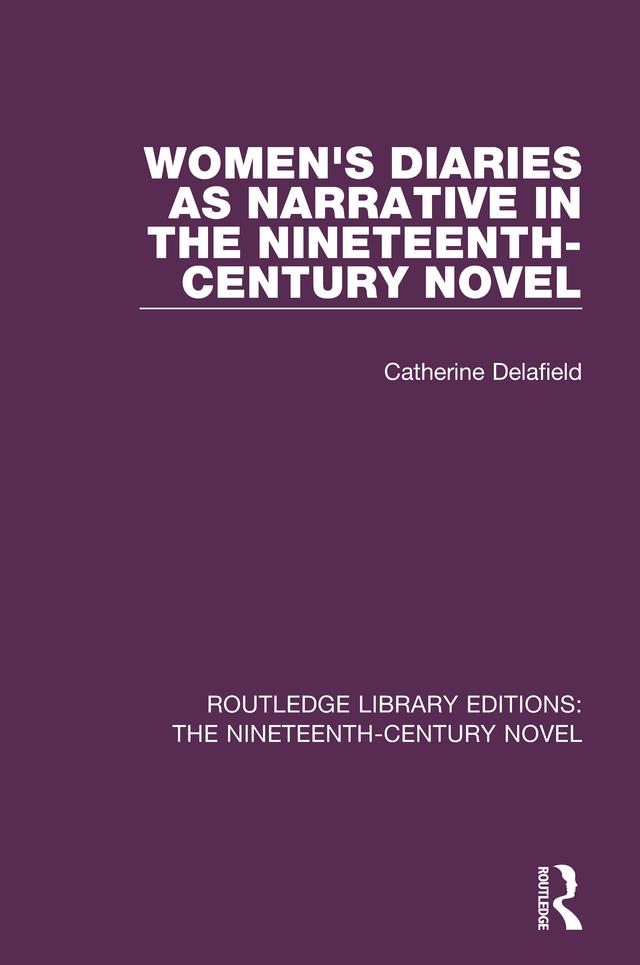
First published in 2009, this book investigates the cultural significance of nineteenth-century women’s writing and reading practices. Beginning with an examination of non-fictional diaries and the practice of diary writing, it assesses the interaction between the fictional diary and other forms of literary production such as epistolary narrative, the periodical, the factual document and sensation fiction. The discrepancies between the private diary and its use as a narrative device are explored through the writings of Frances Burney, Elizabeth Gaskell, Anne Brontë, Dinah Craik, Wilkie Collins and Bram Stoker. It also considers women as writers, readers and subjects and demonstrates ways in which women could become performers of their own story through a narrative method which was authorized by their femininity and at the same time allowed them to challenge the myth of domestic womanhood.
This book will be of interest to those studying 19th century literature and women in literature.
Pay easily by card, Klarna, Apple Pay or Google Pay. Not happy? You always have a 14-day money-back guarantee. Read more in our terms. If you have any questions, email us at hello@memmo.org.
Memmo makes studying easier – wherever you are in the world. We bring your course books and smart study tools together in one place: summaries, quizzes, podcasts and flashcards. Plus Ted, your study buddy who answers anything you wonder. Over 50,000 students already study here – built to help you learn faster and stress less.