
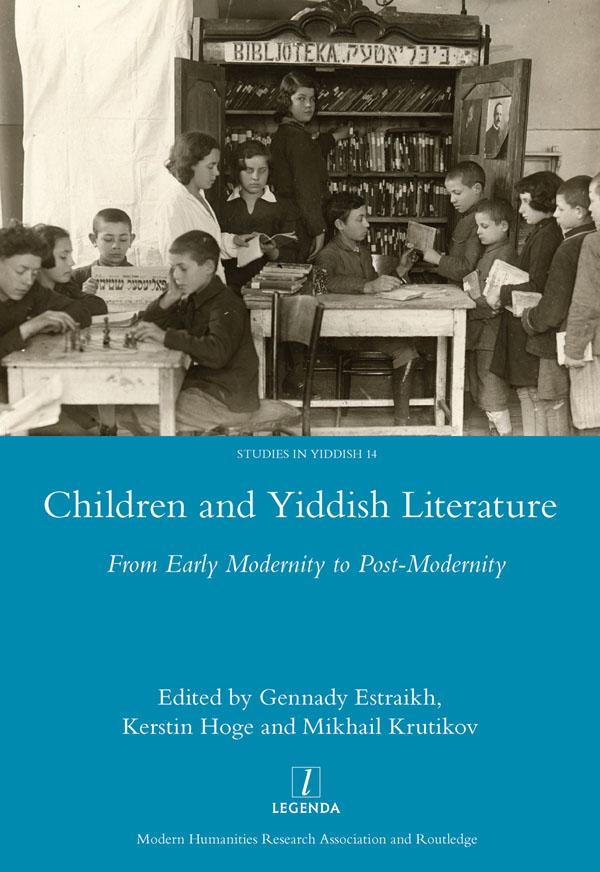
Children have occupied a prominent place in Yiddish literature since early modern times, but children’s literature as a genre has its beginnings in the early 20th century. Its emergence reflected the desire of Jewish intellectuals to introduce modern forms of education, and promote ideological agendas, both in Eastern Europe and in immigrant communities elsewhere. Before the Second World War, a number of publishing houses and periodicals in Europe and the Americas specialized in stories, novels and poems for various age groups. Prominent authors such as Yankev Glatshteyn, Der Nister, Joseph Opatoshu, Leyb Kvitko, made original contributions to the genre, while artists, such as Marc Chagall, El Lissitzky and Yisakhar Ber Rybak, also took an active part. In the Soviet Union, meanwhile, children’s literature provided an opportunity to escape strong ideological pressure. Yiddish children’s literature is still being produced today, both for secular and strongly Orthodox communities.
This volume is a pioneering collective study not only of children’s literature but of the role played by children in literature.
Pay easily by card, Klarna, Apple Pay or Google Pay. Not happy? You always have a 14-day money-back guarantee. Read more in our terms. If you have any questions, email us at hello@memmo.org.
Memmo makes studying easier – wherever you are in the world. We bring your course books and smart study tools together in one place: summaries, quizzes, podcasts and flashcards. Plus Ted, your study buddy who answers anything you wonder. Over 50,000 students already study here – built to help you learn faster and stress less.