
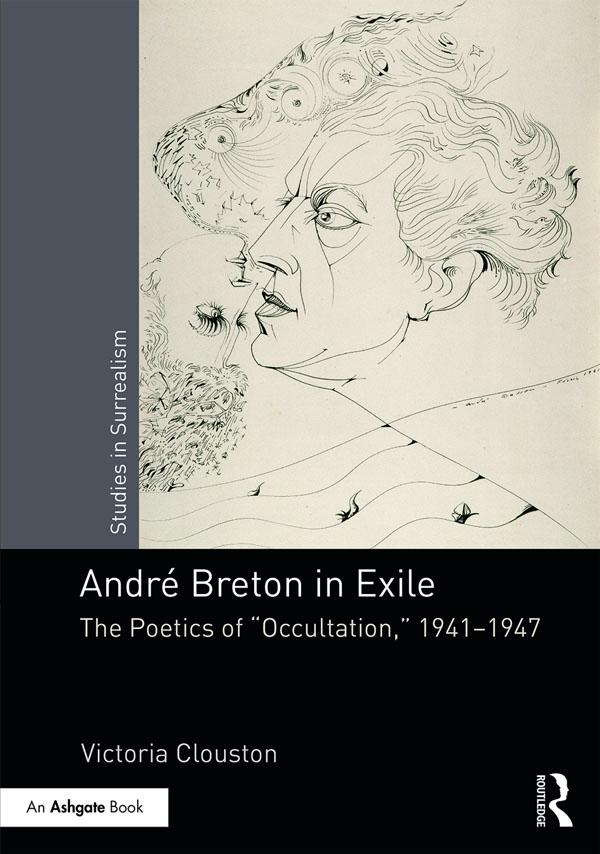
Following the journey of André Breton, the leader of the Surrealist movement, into exile during the Second World War, the author of this book traces the trajectory of his thought and poetic output from 1941–1948. Through a close examination of the major – and as yet little studied – works written during these years, she demonstrates how Breton’s quest for "a new myth" for the postwar world led him to widen his enquiry into hermeticism, myth, and the occult. This ground-breaking study establishes Breton’s profound intellectual debt to 19th-century Romanticism, its literature and thought, revealing how it defined his understanding of hermeticism and the occult, and examining the differences between the two. It shows how, having abandoned political action on leaving the Communist Party in 1935, Breton nonetheless held firmly to political thought, moving in his quest for a better world via Hermes Trismegistus across the utopian ideas of Charles Fourier and the "magical" practices of the Hopi Indians. The author finally reveals Breton’s misreading of the situation in postwar Paris on his return in 1946, and his failure to communicate the span of his ideas for creating a better society while at the same time maintaining a close connection between art and life.
Pay easily by card, Klarna, Apple Pay or Google Pay. Not happy? You always have a 14-day money-back guarantee. Read more in our terms. If you have any questions, email us at hello@memmo.org.
Memmo makes studying easier – wherever you are in the world. We bring your course books and smart study tools together in one place: summaries, quizzes, podcasts and flashcards. Plus Ted, your study buddy who answers anything you wonder. Over 50,000 students already study here – built to help you learn faster and stress less.