
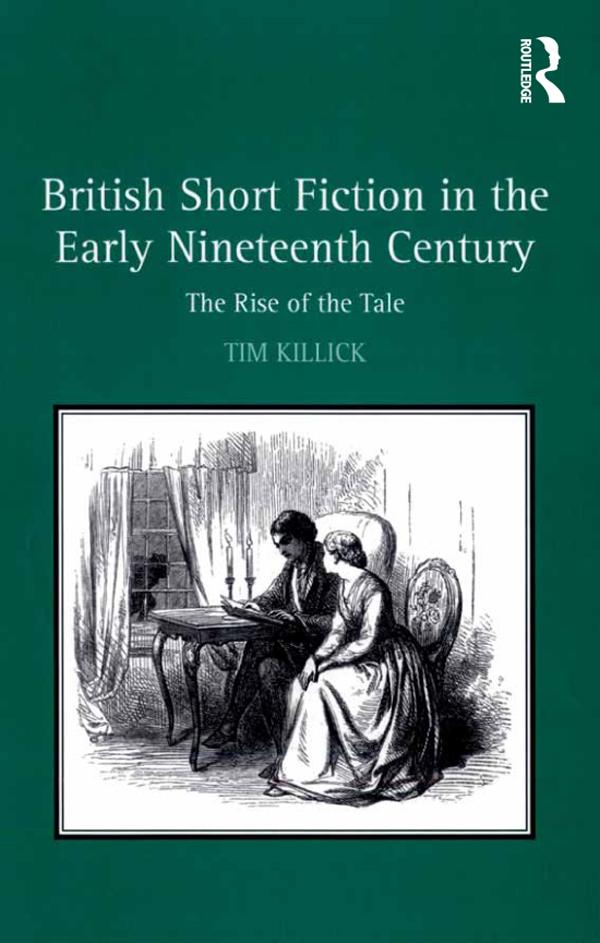
In spite of the importance of the idea of the 'tale' within Romantic-era literature, short fiction of the period has received little attention from critics. Contextualizing British short fiction within the broader framework of early nineteenth-century print culture, Tim Killick argues that authors and publishers sought to present short fiction in book-length volumes as a way of competing with the novel as a legitimate and prestigious genre. Beginning with an overview of the development of short fiction through the late eighteenth century and analysis of the publishing conditions for the genre, including its appearance in magazines and annuals, Killick shows how Washington Irving's hugely popular collections set the stage for British writers. Subsequent chapters consider the stories and sketches of writers as diverse as Mary Russell Mitford and James Hogg, as well as didactic short fiction by authors such as Hannah More, Maria Edgeworth, and Amelia Opie. His book makes a convincing case for the evolution of short fiction into a self-conscious, intentionally modern form, with its own techniques and imperatives, separate from those of the novel.
Pages: 200
Category: Litteraturvetenskap & Teori
e-ISBN: 9781317171454
Shipping weight: 1.2 kg
Ships in: 1-2 days
Pay easily by card, Klarna, Apple Pay or Google Pay. Not happy? You always have a 14-day money-back guarantee. Read more in our terms. If you have any questions, email us at hello@memmo.org.
Memmo makes studying easier – wherever you are in the world. We bring your course books and smart study tools together in one place: summaries, quizzes, podcasts and flashcards. Plus Ted, your study buddy who answers anything you wonder. Over 50,000 students already study here – built to help you learn faster and stress less.
You might also like
Buy the book0