
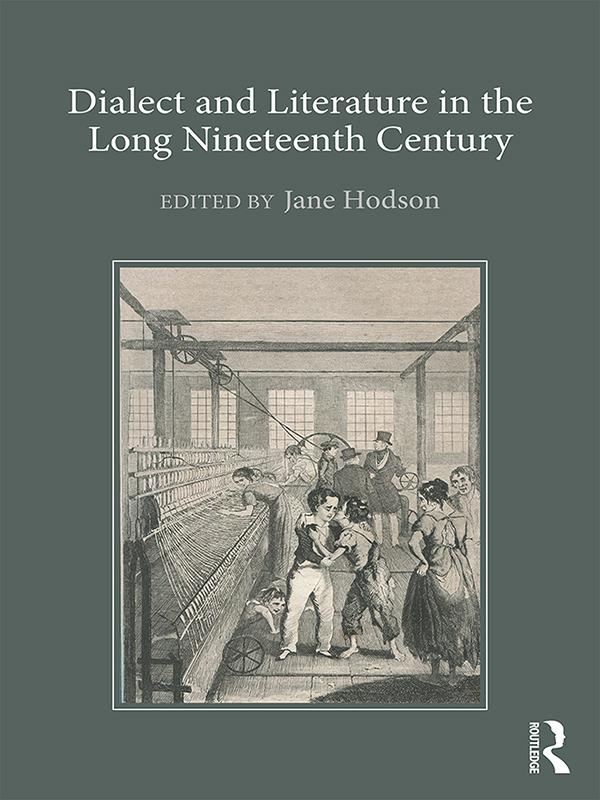
The nineteenth century witnessed a proliferation in the literary uses of dialect, with dialect becoming a key feature in the development of the realist novel, dialect songs being printed by the hundreds in urban centres and dialect poetry becoming a respected form. In this collection, scholars from a wide variety of disciplines, including dialectology, literary linguistics, sociolinguistics, literary studies and the history of the English language, have come together to examine the theory, context and ideology of the use of dialect in the nineteenth century. The texts considered range from the Cumberland poetry of Josiah Relph to the novels of Frances Trollope and Elizabeth Gaskell, and from popular Tyneside song to the dialect poetry of Alfred Tennyson. Throughout the volume, the contributors debate whether or not 'authenticity' is a meaningful category, the significance of metalanguage and paratext in the presentation of dialect, the differences between 'literary dialect' and 'dialect literature', the responses of 'insider' versus 'outsider' audiences and whether the representation of dialect is a hegemonic or resistant strategy. This is the first book to focus on practices of dialect representation in literature in the nineteenth century. Taken together, the chapters offer an exciting overview of the challenging work currently being undertaken in this field.
Pages: 196
Category: Litteraturvetenskap & Teori
e-ISBN: 9781317151470
Shipping weight: 1.2 kg
Ships in: 1-2 days
Pay easily by card, Klarna, Apple Pay or Google Pay. Not happy? You always have a 14-day money-back guarantee. Read more in our terms. If you have any questions, email us at hello@memmo.org.
Memmo makes studying easier – wherever you are in the world. We bring your course books and smart study tools together in one place: summaries, quizzes, podcasts and flashcards. Plus Ted, your study buddy who answers anything you wonder. Over 50,000 students already study here – built to help you learn faster and stress less.
You might also like
Buy the book0