
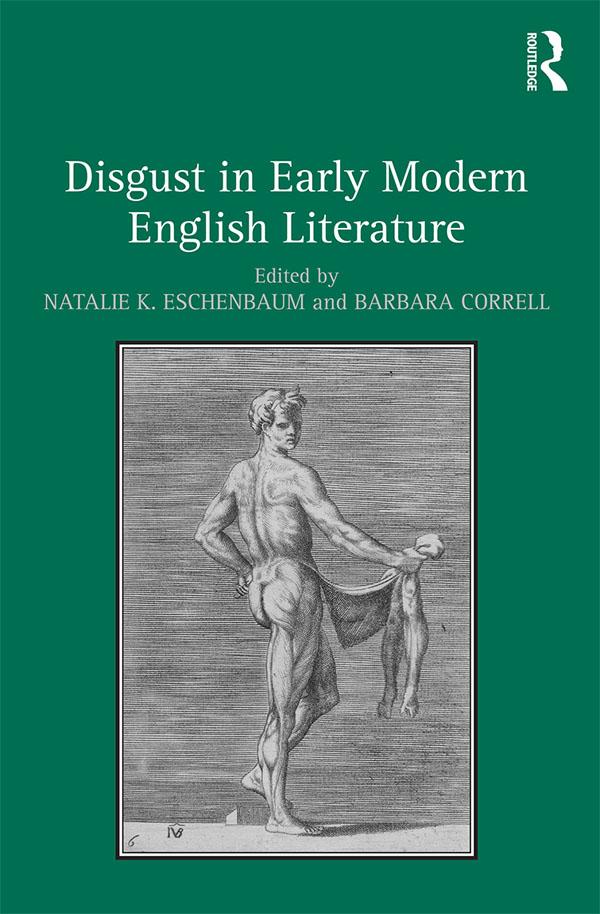
What is the role of disgust or revulsion in early modern English literature? How did early modern English subjects experience revulsion and how did writers represent it in poetry, plays, and prose? What does it mean when literature instructs, delights, and disgusts? This collection of essays looks at the treatment of disgust in texts by Spenser, Shakespeare, Donne, Jonson, Herrick, and others to demonstrate how disgust, perhaps more than other affects, gives us a more complex understanding of early modern culture. Dealing with descriptions of coagulated eye drainage, stinky leeks, and blood-filled fleas, among other sensational things, the essays focus on three kinds of disgusting encounters: sexual, cultural, and textual. Early modern English writers used disgust to explore sexual mores, describe encounters with foreign cultures, and manipulate their readers' responses. The essays in this collection show how writers deployed disgust to draw, and sometimes to upset, the boundaries that had previously defined acceptable and unacceptable behaviors, people, and literatures. Together they present the compelling argument that a critical understanding of early modern cultural perspectives requires careful attention to disgust.
Pay easily by card, Klarna, Apple Pay or Google Pay. Not happy? You always have a 14-day money-back guarantee. Read more in our terms. If you have any questions, email us at hello@memmo.org.
Memmo makes studying easier – wherever you are in the world. We bring your course books and smart study tools together in one place: summaries, quizzes, podcasts and flashcards. Plus Ted, your study buddy who answers anything you wonder. Over 50,000 students already study here – built to help you learn faster and stress less.
You might also like
Buy the book0