
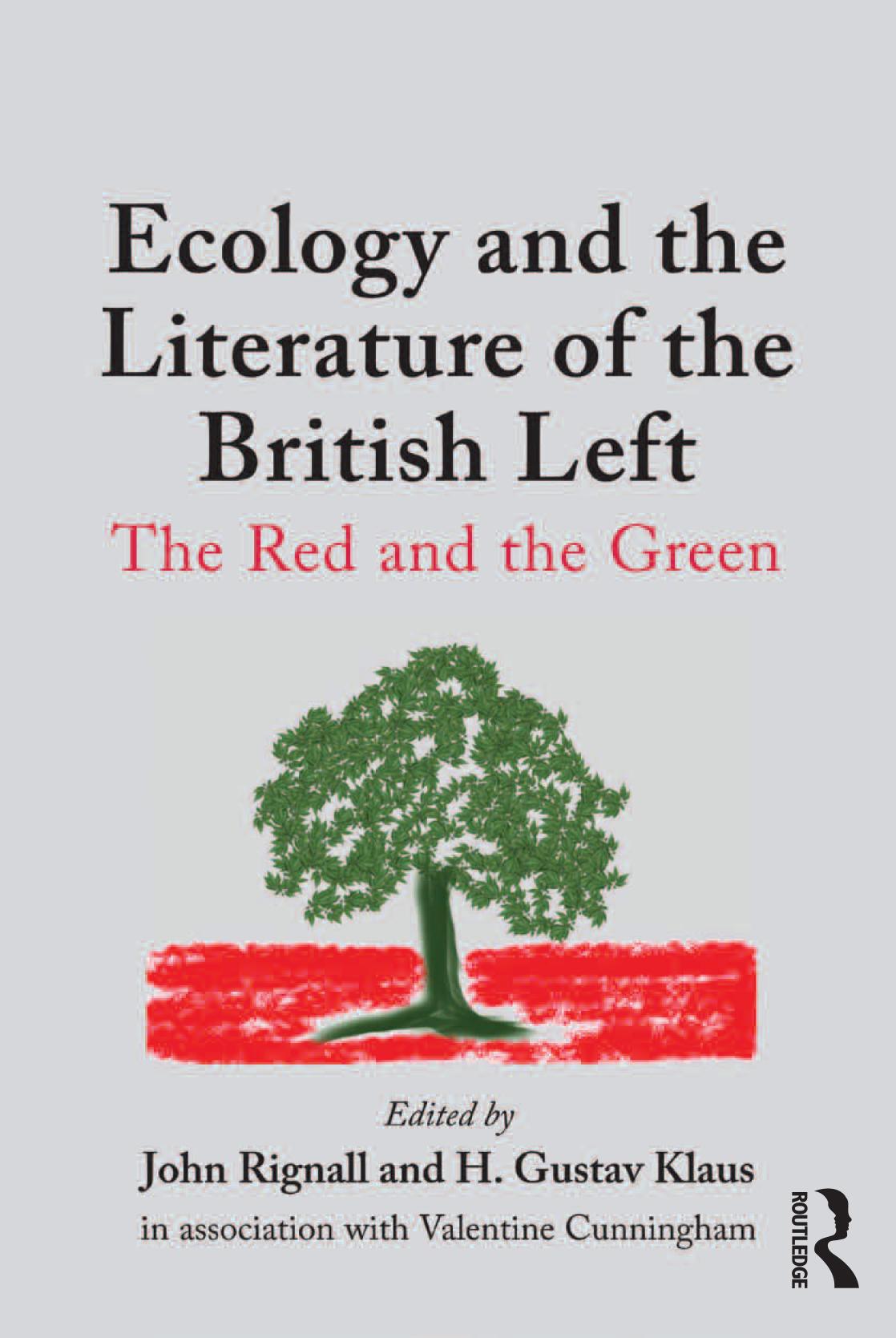
Premised on the belief that a social and an ecological agenda are compatible, this collection offers readings in the ecology of left and radical writing from the Romantic period to the present. While early ecocriticism tended to elide the bitter divisions within and between societies, recent practitioners of ecofeminism, environmental justice, and social ecology have argued that the social, the economic and the environmental have to be seen as part of the same process. Taking up this challenge, the contributors trace the origins of an environmental sensibility and of the modern left to their roots in the late eighteenth and early nineteenth centuries, charting the ways in which the literary imagination responds to the political, industrial and agrarian revolutions. Topics include Samuel Taylor Coleridge's credentials as a green writer, the interaction between John Ruskin's religious and political ideas and his changing view of nature, William Morris and the Garden City movement, H. G. Wells and the Fabians, the devastated landscapes in the poetry and fiction of the First World War, and the leftist pastoral poetry of the 1930s. In historicizing and connecting environmentally sensitive literature with socialist thought, these essays explore the interactive vision of nature and society in the work of writers ranging from William Wordsworth and John Clare to John Berger and John Burnside.
Pay easily by card, Klarna, Apple Pay or Google Pay. Not happy? You always have a 14-day money-back guarantee. Read more in our terms. If you have any questions, email us at hello@memmo.org.
Memmo makes studying easier – wherever you are in the world. We bring your course books and smart study tools together in one place: summaries, quizzes, podcasts and flashcards. Plus Ted, your study buddy who answers anything you wonder. Over 50,000 students already study here – built to help you learn faster and stress less.
You might also like
Buy the book0