
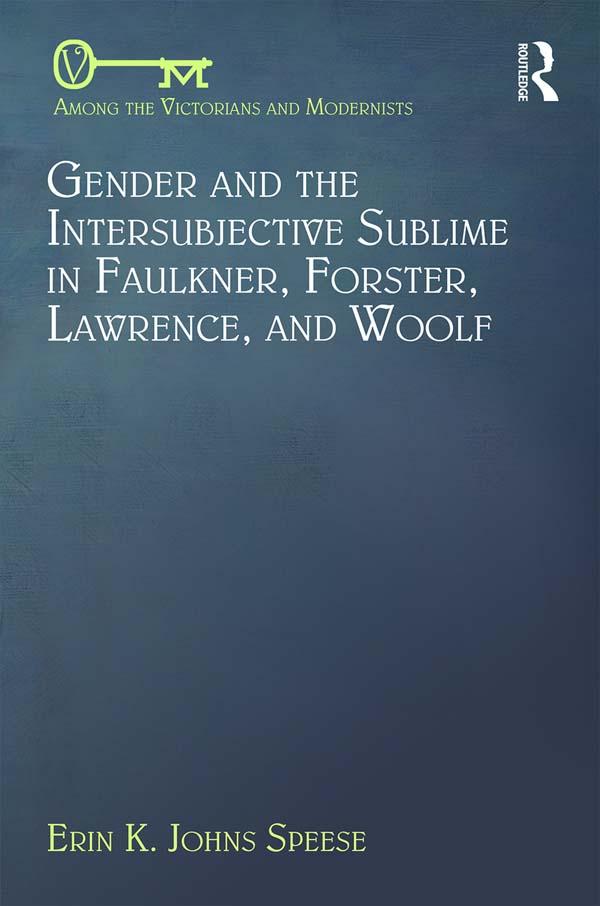
Exploring how the modern novel's complex depictions of parenthood restructure traditional conceptions of the Romantic sublime, Erin K. Johns Speese shows how William Faulkner, E.M. Forster, D.H. Lawrence, and Virginia Woolf use related strategies to rewrite the traditional sublime as an intersubjective experience. Speese shows that this reframing depends on the recognition of social objectification and an ethics of reciprocal empathy between mothers and fathers. She juxtaposes traditional aesthetics and Slavoj Žižek’s concept of the sublime object of ideology with recent theoretical work regarding identity, arguing that these modern novelists construct what she terms a "sublime subject," that is, a person who functions in the space of the traditional sublime object. In revealing the possibility of transcendent emotional connection over reason, these novelists critique the objectification of the other in favor of a sublime experience that reveals the subject-shattering power of empathy.
Pay easily by card, Klarna, Apple Pay or Google Pay. Not happy? You always have a 14-day money-back guarantee. Read more in our terms. If you have any questions, email us at hello@memmo.org.
Memmo makes studying easier – wherever you are in the world. We bring your course books and smart study tools together in one place: summaries, quizzes, podcasts and flashcards. Plus Ted, your study buddy who answers anything you wonder. Over 50,000 students already study here – built to help you learn faster and stress less.
You might also like
Buy the book0