
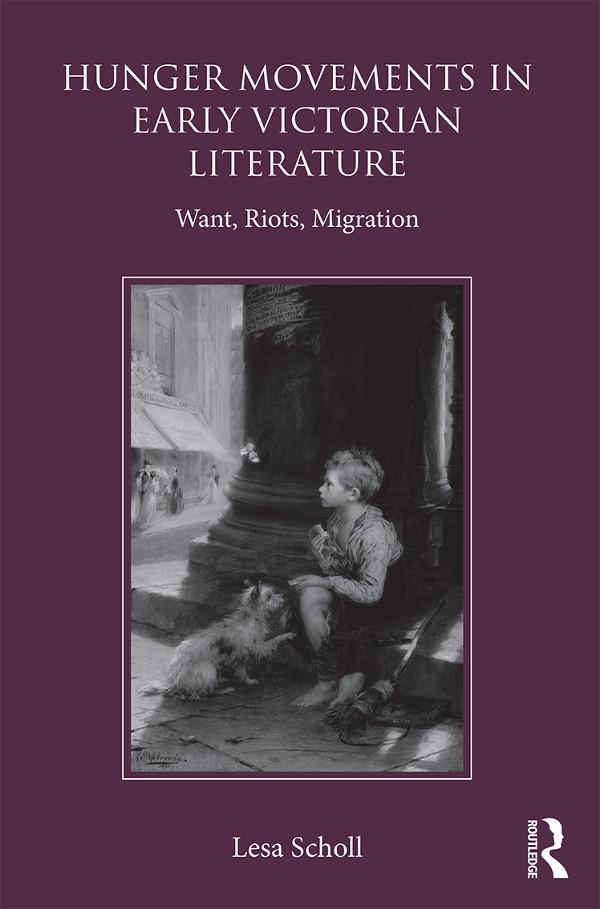
In Hunger Movements in Early Victorian Literature, Lesa Scholl explores the ways in which the language of starvation interacts with narratives of emotional and intellectual want to create a dynamic, evolving notion of hunger. Scholl's interdisciplinary study emphasises literary analysis, sensory history, and political economy to interrogate the progression of hunger in Britain from the early 1830s to the late 1860s. Examining works by Charles Dickens, Harriet Martineau, George Eliot, Elizabeth Gaskell, Henry Mayhew, and Charlotte Bronte, Scholl argues for the centrality of hunger in social development and understanding. She shows how the rhetoric of hunger moves beyond critiques of physical starvation to a paradigm in which the dominant narrative of civilisation is predicated on the continual progress and evolution of literal and metaphorical taste. Her study makes a persuasive case for how hunger, as a signifier of both individual and corporate ambition, is a necessarily self-interested and increasingly violent agent of progress within the discourse of political economy that emerged in the eighteenth century and subsequently shaped nineteenth-century social and political life.
Pay easily by card, Klarna, Apple Pay or Google Pay. Not happy? You always have a 14-day money-back guarantee. Read more in our terms. If you have any questions, email us at hello@memmo.org.
Memmo makes studying easier – wherever you are in the world. We bring your course books and smart study tools together in one place: summaries, quizzes, podcasts and flashcards. Plus Ted, your study buddy who answers anything you wonder. Over 50,000 students already study here – built to help you learn faster and stress less.