
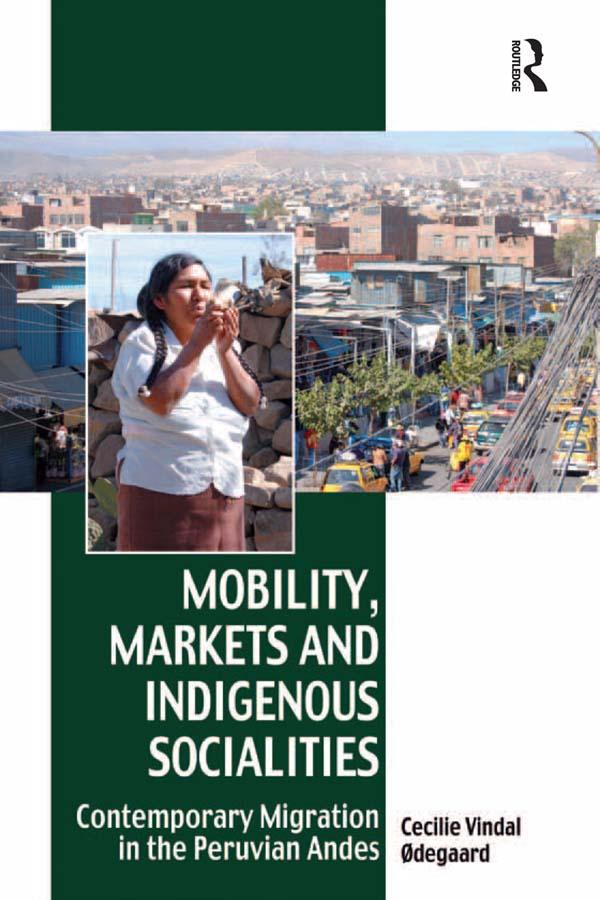
Exploring how people from Andean communities seek progress and social mobility by moving to the cities, Cecilie Ødegaard demonstrates the changing significance of kinship, reciprocity and ritual in an urban context. Through a focus on people´s involvement in land occupations and local associations, labour and trade, Ødegaard examines the dialectics between popular practices and neoliberal state policies in processes of urbanization. The making and un-making of notions of the Indigenous, communal work, and gender is central in this analysis, and is discussed against the historical backdrop of the land occupations in Peruvian cities since the 1930s. Through its close ethnographic description of everyday life in a new urban neighbourhood, this book reveals how social and spatial categories and boundaries are continually negotiated in people´s quest for mobility and progress. Cecilie Ødegaard argues that conventional meanings of prosperity and progress are significantly altered in interaction with Andean understandings of reciprocity. By combining a unique ethnographic account with original theoretical arguments, the book provides new insight into the cultural, cosmological and political dimensions of mobility, progress and market participation.
Pay easily by card, Klarna, Apple Pay or Google Pay. Not happy? You always have a 14-day money-back guarantee. Read more in our terms. If you have any questions, email us at hello@memmo.org.
Memmo makes studying easier – wherever you are in the world. We bring your course books and smart study tools together in one place: summaries, quizzes, podcasts and flashcards. Plus Ted, your study buddy who answers anything you wonder. Over 50,000 students already study here – built to help you learn faster and stress less.
You might also like
Buy the book0