
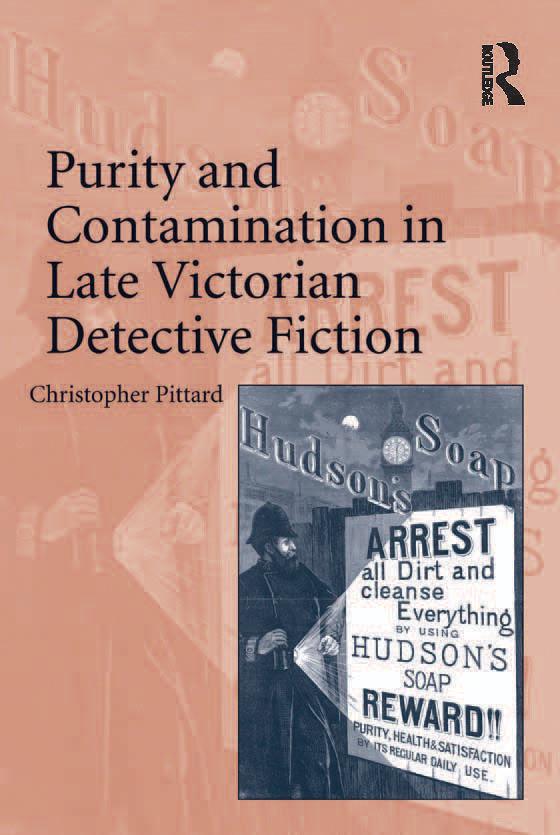
Concentrating on works by authors such as Fergus Hume, Arthur Conan Doyle, Grant Allen, L.T. Meade, and Marie Belloc Lowndes, Christopher Pittard explores the complex relation between the emergence of detective fictions in the 1880s and 1890s and the concept of purity. The centrality of material and moral purity as a theme of the genre, Pittard argues, both reflected and satirised a contemporary discourse of degeneration in which criminality was equated with dirt and disease and where national boundaries were guarded against the threat of the criminal foreigner. Situating his discussion within the ideologies underpinning George Newnes's Strand Magazine as well as a wide range of nonfiction texts, Pittard demonstrates that the genre was a response to the seductive and impure delights associated with sensation and gothic novels. Further, Pittard suggests that criticism of detective fiction has in turn become obsessed with the idea of purity, thus illustrating how a genre concerned with policing the impure itself became subject to the same fear of contamination. Contributing to the richness of Pittard's project are his discussions of the convergence of medical discourse and detective fiction in the 1890s, including the way social protest movements like the antivivisectionist campaigns and medical explorations of criminality raised questions related to moral purity.
Pay easily by card, Klarna, Apple Pay or Google Pay. Not happy? You always have a 14-day money-back guarantee. Read more in our terms. If you have any questions, email us at hello@memmo.org.
Memmo makes studying easier – wherever you are in the world. We bring your course books and smart study tools together in one place: summaries, quizzes, podcasts and flashcards. Plus Ted, your study buddy who answers anything you wonder. Over 50,000 students already study here – built to help you learn faster and stress less.
You might also like
Buy the book0