
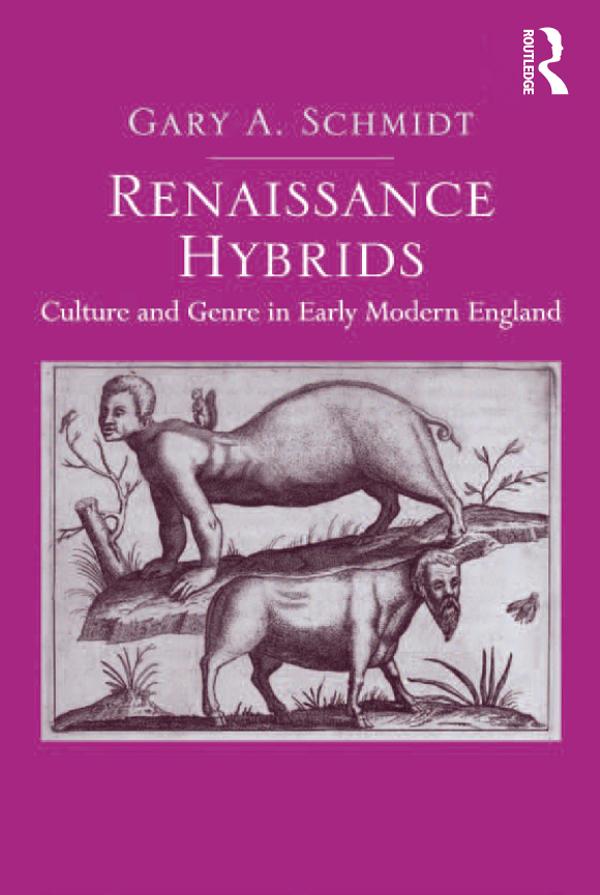
In the first book-length study explicitly to connect the postcolonial trope of hybridity to Renaissance literature, Gary Schmidt examines how sixteenth- and seventeenth-century English authors, artists, explorers and statesmen exercised a concerted effort to frame questions of cultural and artistic heterogeneity. This book is unique in its exploration of how 'hybrid' literary genres emerge at particular historical moments as vehicles for negotiating other kinds of hybridity, including but not limited to cultural and political hybridity. In particular, Schmidt addresses three distinct manifestations of 'hybridity' in English literature and iconography during this period. The first category comprises literal hybrid creatures such as satyrs, centaurs, giants, and changelings; the second is cultural hybrids reflecting the mixed status of the nation; and the third is generic hybrids such as the Shakespearean 'problem play,' the volatile verse satires of Nashe, Hall and Marston, and the tragicomedies of Beaumont and Fletcher. In Renaissance Hybrids, Schmidt demonstrates 'postmodern' considerations not to be unique to our own critical milieu. Rather, they can fruitfully elucidate cultural and literary developments in the English Renaissance, forging a valuable link in the history of ideas and practices, and revealing a new dimension in the relation of early modern studies to the concerns of the present.
Pay easily by card, Klarna, Apple Pay or Google Pay. Not happy? You always have a 14-day money-back guarantee. Read more in our terms. If you have any questions, email us at hello@memmo.org.
Memmo makes studying easier – wherever you are in the world. We bring your course books and smart study tools together in one place: summaries, quizzes, podcasts and flashcards. Plus Ted, your study buddy who answers anything you wonder. Over 50,000 students already study here – built to help you learn faster and stress less.
You might also like
Buy the book0