
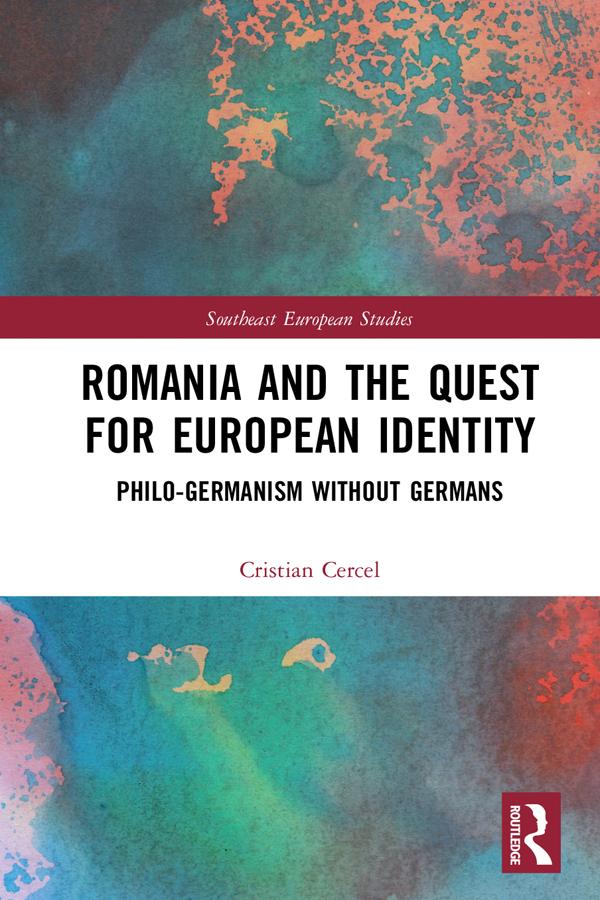
Exploring the largely positive representations of Romanian Germans predominating in post-1989 Romanian society, this book shows that the underlying reasons for German prestige are strongly connected with Romania’s endeavors to become European.
The election, in 2014, of Klaus Iohannis as Romania’s president was hailed as evidence that the country chose a 'European’ future: that Iohannis belonged to Romania’s tiny German minority was also considered to have played a part in his success. Cercel argues that representations of Germans in Romania, descendants of twelfth-century and eighteenth-century colonists, become actually a symbolic resource for asserting but also questioning Romania’s European identity. Such representations link Romania’s much-desired European belonging with German presence, whilst German absence is interpreted as a sign of veering away from Europe. Investigating this case of discursive "self-colonization" and this apparent symbolic embrace of the German Other in Romania, the book offers a critical study of the discourses associated with Romania’s postcommunist "Europeanization" to contribute a better understanding of contemporary West-East relationships in the European context.
This fresh and insightful approach will interest postgraduates and scholars interested in Central, Eastern and Southeastern Europe and in German minorities outside Germany. It should also appeal to scholars of memory studies and those interested in the study of otherness in general.
Pay easily by card, Klarna, Apple Pay or Google Pay. Not happy? You always have a 14-day money-back guarantee. Read more in our terms. If you have any questions, email us at hello@memmo.org.
Memmo makes studying easier – wherever you are in the world. We bring your course books and smart study tools together in one place: summaries, quizzes, podcasts and flashcards. Plus Ted, your study buddy who answers anything you wonder. Over 50,000 students already study here – built to help you learn faster and stress less.