
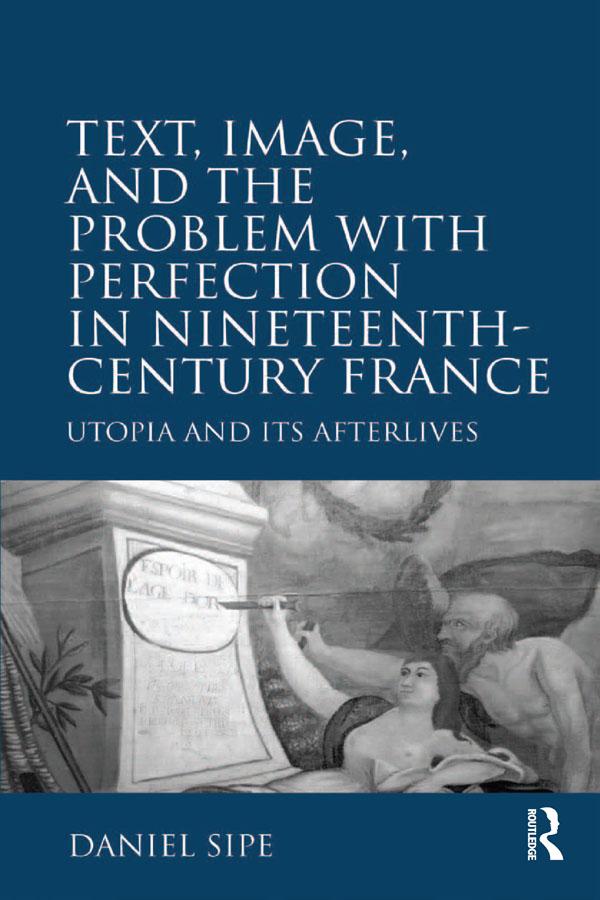
In the decades after the French Revolution, philosophers, artists, and social scientists set out to chart and build a way to a new world and their speculative blueprints circulated like banknotes in a parallel economy of ideas. Examining representations of ideal societies in nineteenth-century French culture, Daniel Sipe argues that the dream-image of the literary or art-historical utopia does not disappear but rather is profoundly altered by its proximity to the social utopianism of the day. Sipe focuses on this persistent afterlife in utopias ranging from François-René de Chateaubriand’s Amerindian utopia in Atala (1801) to the utopian spoof of J.J. Grandville’s illustrated novel Un autre monde (1844). He proposes a new reading of Etienne Cabet’s seminal utopian novel, Voyage en Icarie (1840) and offers an original perspective on the gendered utopias of technological inspiration that authors such as Charles Barbara and Auguste Villiers de l’Isle-Adam penned in the second half of the century. In addition, Sipe considers utopias or important readings of the century’s rampant utopianism in, among others, Victor Hugo, Alfred de Vigny, Théophile Gautier, Charles Baudelaire, and Gustave Courbet. His book provides the historical context for comprehending the significance and implications of this enigmatic afterlife in nineteenth-century utopian art and literature.
Pay easily by card, Klarna, Apple Pay or Google Pay. Not happy? You always have a 14-day money-back guarantee. Read more in our terms. If you have any questions, email us at hello@memmo.org.
Memmo makes studying easier – wherever you are in the world. We bring your course books and smart study tools together in one place: summaries, quizzes, podcasts and flashcards. Plus Ted, your study buddy who answers anything you wonder. Over 50,000 students already study here – built to help you learn faster and stress less.
You might also like
Buy the book0