
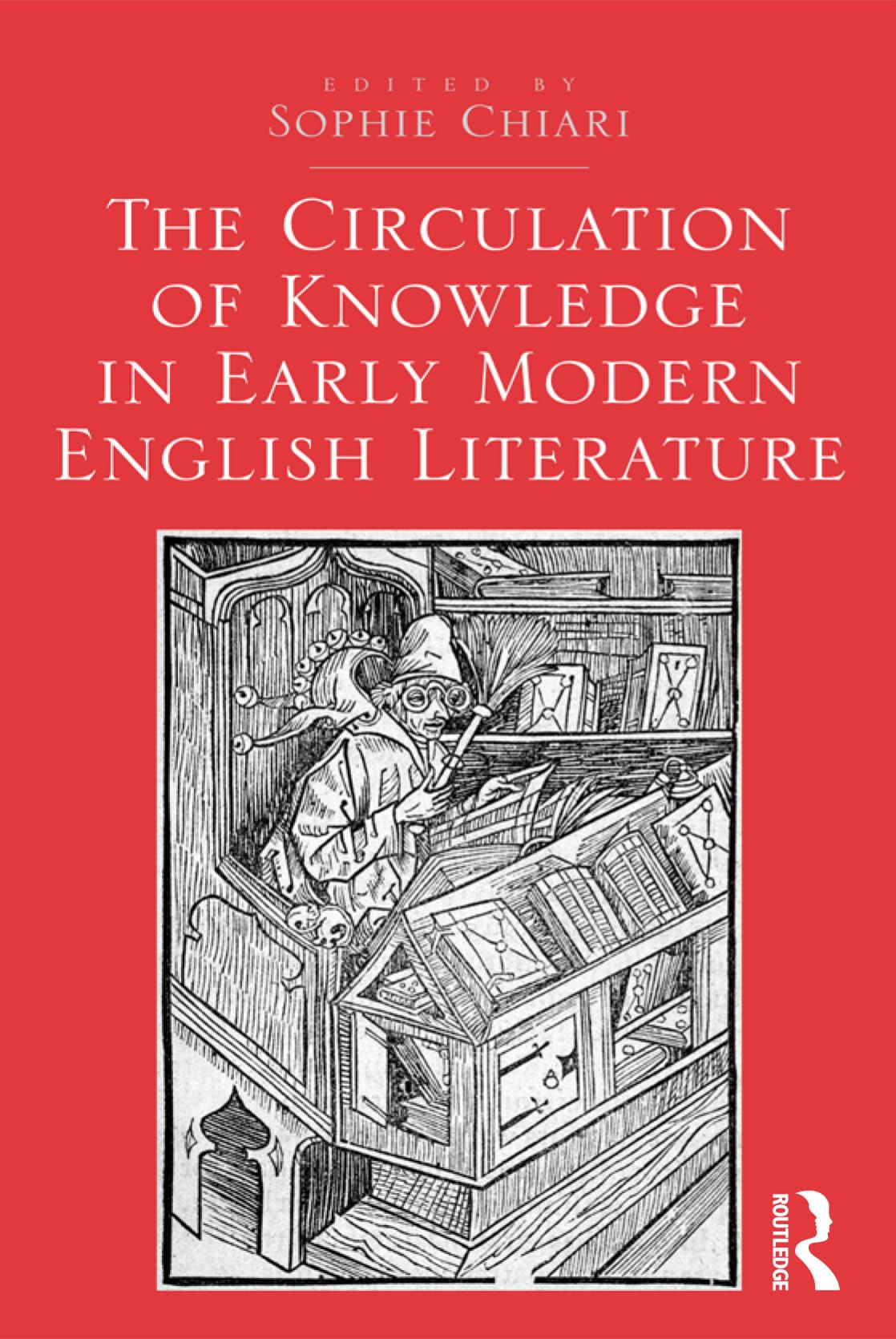
With its many rites of initiation (religious, educational, professional or sexual), Elizabethan and Jacobean education emphasized both imitation and discovery in a struggle to bring population to a minimal literacy, while more demanding techniques were being developed for the cultural elite. The Circulation of Knowledge in Early Modern English Literature examines the question of transmission and of the educational procedures in16th- and 17th-century England by emphasizing deviant practices that questioned, reassessed or even challenged pre-established cultural norms and traditions. This volume thus alternates theoretical analyses with more specific readings in order to investigate the multiple ways in which ideas then circulated. It also addresses the ways in which the dominant cultural forms of the literature and drama of Shakespeare’s age were being subverted. In this regard, its various contributors analyze how the interrelated processes of initiation, transmission and transgression operated at the core of early modern English culture, and how Christopher Marlowe, William Shakespeare and Thomas Middleton, or lesser known poets and playwrights such as Thomas Howell, Thomas Edwards and George Villiers, managed to appropriate these cultural processes in their works.
Pay easily by card, Klarna, Apple Pay or Google Pay. Not happy? You always have a 14-day money-back guarantee. Read more in our terms. If you have any questions, email us at hello@memmo.org.
Memmo makes studying easier – wherever you are in the world. We bring your course books and smart study tools together in one place: summaries, quizzes, podcasts and flashcards. Plus Ted, your study buddy who answers anything you wonder. Over 50,000 students already study here – built to help you learn faster and stress less.
You might also like
Buy the book0