
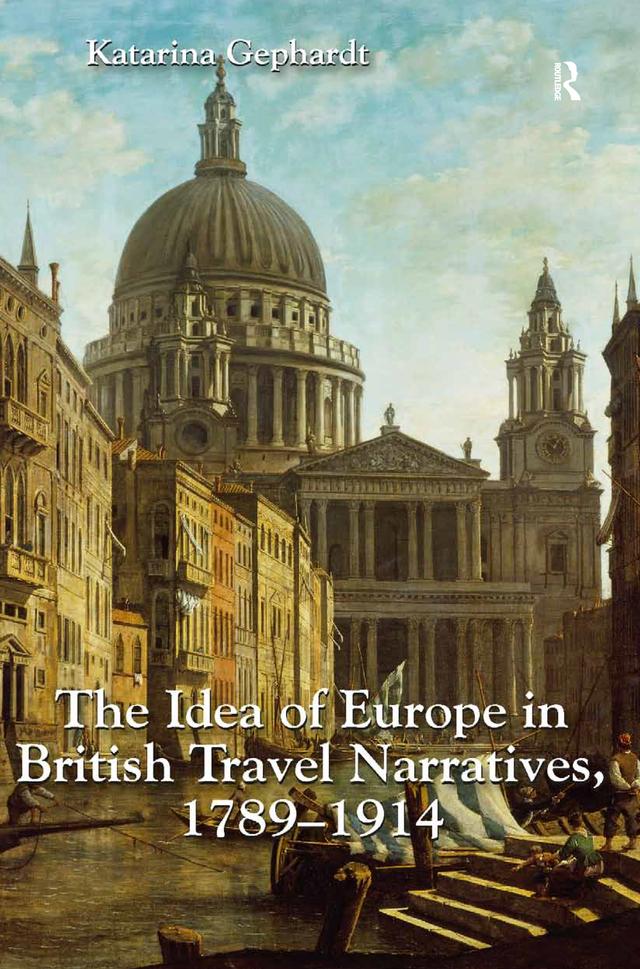
The nineteenth century was the heyday of travel, with Britons continually reassessing their own culture in relation to not only the colonized but also other Europeans, especially the ones that they encountered on the southern and eastern peripheries of the continent. Offering illustrative case studies, Katarina Gephardt shows how specific rhetorical strategies used in contemporary travel writing produced popular fictional representations of continental Europe in the works of Ann Radcliffe, Lord Byron, Charles Dickens, and Bram Stoker. She examines a wide range of autobiographical and fictional travel narratives to demonstrate that the imaginative geographies underpinning British ideas of Europe emerged from the spaces between fact and fiction. Adding texture to her study are her analyses of the visual dimensions of cross-cultural representation and of the role of evolving technologies in defining a shared set of rhetorical strategies. Gephardt argues that British writers envisioned their country simultaneously as distinct from the Continent and as a part of Europe, anticipating the contradictory British discourse around European integration that involves both fear that the European super-state will violate British sovereignty and a desire to play a more central role in the European Union.
Pay easily by card, Klarna, Apple Pay or Google Pay. Not happy? You always have a 14-day money-back guarantee. Read more in our terms. If you have any questions, email us at hello@memmo.org.
Memmo makes studying easier – wherever you are in the world. We bring your course books and smart study tools together in one place: summaries, quizzes, podcasts and flashcards. Plus Ted, your study buddy who answers anything you wonder. Over 50,000 students already study here – built to help you learn faster and stress less.
You might also like
Buy the book0