
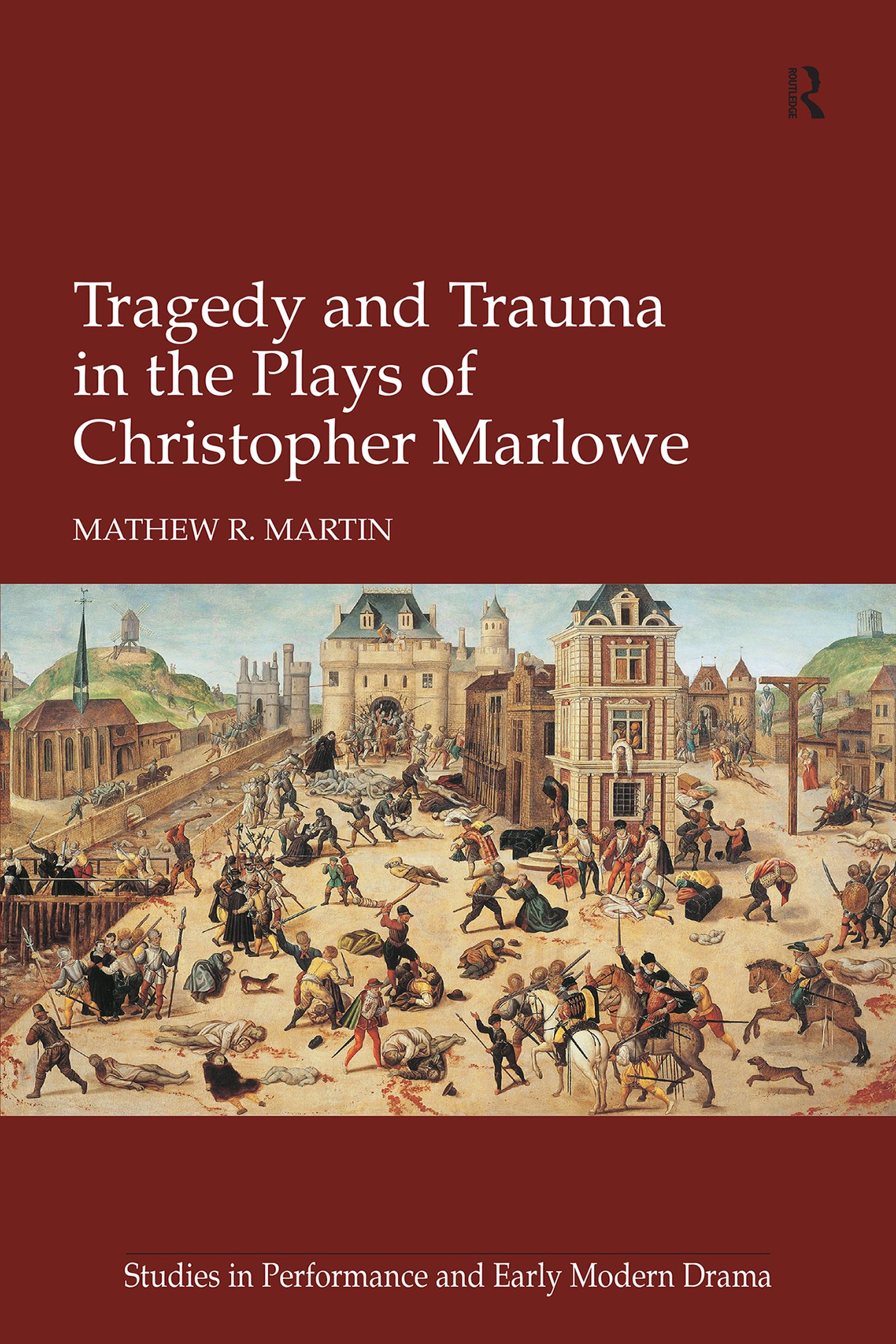
Contending that criticism of Marlowe’s plays has been limited by humanist conceptions of tragedy, this book engages with trauma theory, especially psychoanalytic trauma theory, to offer a fresh critical perspective within which to make sense of the tension in Marlowe’s plays between the tragic and the traumatic. The author argues that tragedies are trauma narratives, narratives of wounding; however, in Marlowe’s plays, a traumatic aesthetics disrupts the closure that tragedy seeks to enact. Martin’s fresh reading of Massacre at Paris, which is often dismissed by critics as a bad tragedy, presents the play as deliberately breaking the conventions of the tragic genre in order to enact a traumatic aesthetics that pulls its audience into one of the early modern period’s most notorious collective traumatic events, the massacre of French Huguenots in Paris in 1572. The chapters on Marlowe’s six other plays similarly argue that throughout Marlowe’s drama tragedy is held in tension with-and disrupted by-the aesthetics of trauma.
Pay easily by card, Klarna, Apple Pay or Google Pay. Not happy? You always have a 14-day money-back guarantee. Read more in our terms. If you have any questions, email us at hello@memmo.org.
Memmo makes studying easier – wherever you are in the world. We bring your course books and smart study tools together in one place: summaries, quizzes, podcasts and flashcards. Plus Ted, your study buddy who answers anything you wonder. Over 50,000 students already study here – built to help you learn faster and stress less.
You might also like
Buy the book0