
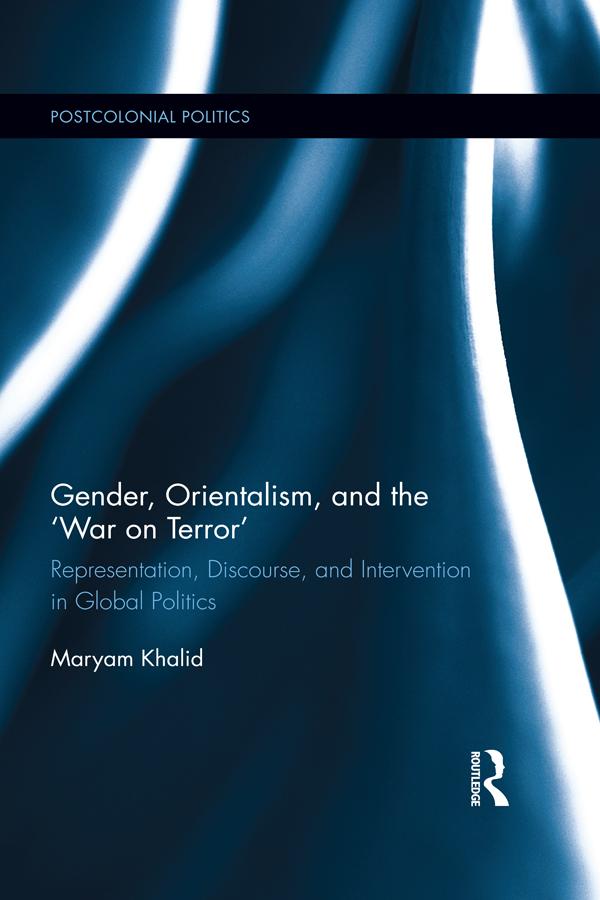
This book offers an accessible and timely analysis of the ‘War on Terror’, based on an innovative approach to a broad range of theoretical and empirical research. It uses ‘gendered orientalism’ as a lens through which to read the relationship between the George W. Bush administration, gendered and racialized military intervention, and global politics.
Khalid argues that legitimacy, power, and authority in global politics, and the ‘War on Terror’ specifically, are discursively constructed through representations that are gendered and racialized, and often orientalist. Looking at the ways in which ‘official’ US ‘War on Terror’ discourse enabled military intervention into Afghanistan and Iraq, the book takes a postcolonial feminist approach to broaden the scope of critical analyses of the ‘War on Terror’ and reflect on the gendered and racial underpinnings of key relations of power within contemporary global politics.
This book is a unique, innovative and significant analysis of the operation of race, orientalism, and gender in global politics, and the ‘War on Terror’ specifically. It will be of great interest to scholars and graduates interested in gender politics, development, humanitarian intervention, international (global) relations, Middle East politics, security, and US foreign policy.
Pay easily by card, Klarna, Apple Pay or Google Pay. Not happy? You always have a 14-day money-back guarantee. Read more in our terms. If you have any questions, email us at hello@memmo.org.
Memmo makes studying easier – wherever you are in the world. We bring your course books and smart study tools together in one place: summaries, quizzes, podcasts and flashcards. Plus Ted, your study buddy who answers anything you wonder. Over 50,000 students already study here – built to help you learn faster and stress less.