
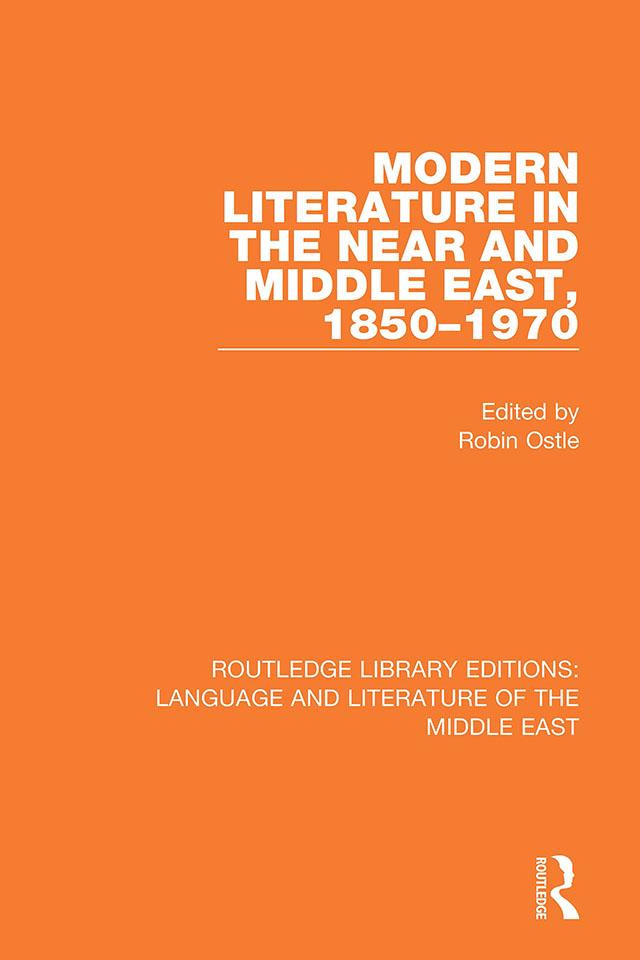
Enormous political and social changes brought about by modernization have naturally found expression in the literatures of the Near and Middle East. The contributors to this book, first published in 1991, trace the development of modern literary sensibility, in Turkish, Arabic, Persian and modern Hebrew. It is argued that the period can be divided into three broad phases – the age of translation after 1850, when formerly self-sufficient elites throughout the region began to reach out to the West for new ideas and stylistic models; the surge of romantic nationalism after the First World War and the decline of imperialism; and the modern period after 1950, a time of growing self-awareness and self-definition among writers against an often violent background of inter- and intra-state conflict. The product of different nations, races and traditions, there are nevertheless constant themes in the literatures of this period – the colonial heritage, nationalism, justice, poverty and wealth, migration from country to city, confrontation between self and other, and between East and West, collapse and rebirth.
Pay easily by card, Klarna, Apple Pay or Google Pay. Not happy? You always have a 14-day money-back guarantee. Read more in our terms. If you have any questions, email us at hello@memmo.org.
Memmo makes studying easier – wherever you are in the world. We bring your course books and smart study tools together in one place: summaries, quizzes, podcasts and flashcards. Plus Ted, your study buddy who answers anything you wonder. Over 50,000 students already study here – built to help you learn faster and stress less.