
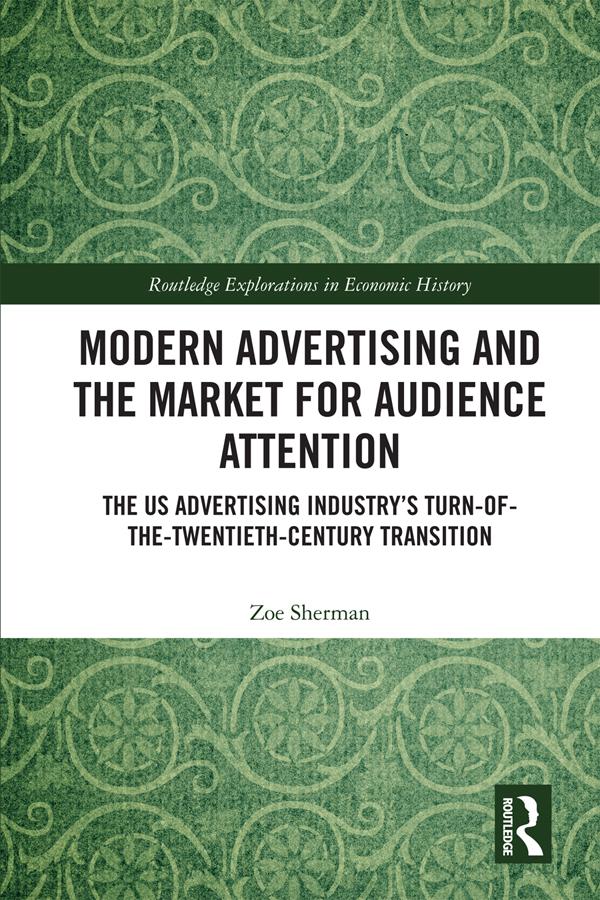
Modern advertising was created in the US between 1870 and 1920 when advertisers and the increasingly specialized advertising industry that served them crafted means of reliable access to and knowledge of audiences.
This highly original and accessible book re-centers the story of the invention of modern advertising on the question of how access to audiences was streamlined and standardized. Drawing from late-nineteenth and early-twentieth-century materials, especially from the advertising industry’s professional journals and the business press, chapters on the development of print media, billboard, and direct mail advertising illustrate the struggles amongst advertisers, intermediaries, audience-sellers, and often-resistant audiences themselves. Over time, the maturing advertising industry transformed the haphazard business of getting advertisements before the eyes of the public into a market in which audience attention could be traded as a commodity.
This book applies economic theory with historical narrative to explain market participants’ ongoing quests to expand the reach of the market and to increase the efficiency of attention harvesting operations. It will be of interest to scholars of contemporary American advertising, the history of advertising more generally, and also of economic history and theory.
Pay easily by card, Klarna, Apple Pay or Google Pay. Not happy? You always have a 14-day money-back guarantee. Read more in our terms. If you have any questions, email us at hello@memmo.org.
Memmo makes studying easier – wherever you are in the world. We bring your course books and smart study tools together in one place: summaries, quizzes, podcasts and flashcards. Plus Ted, your study buddy who answers anything you wonder. Over 50,000 students already study here – built to help you learn faster and stress less.