
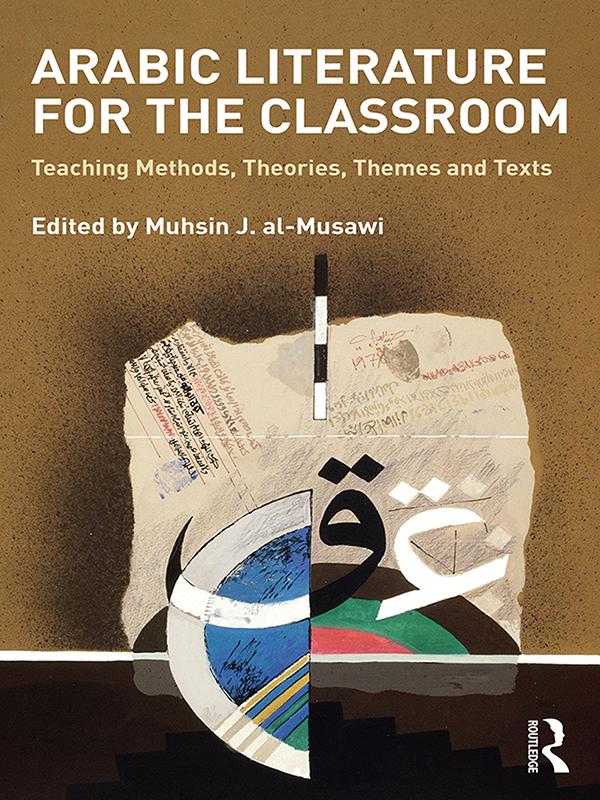
Arabic Literature for the Classroom argues for a more visible presence of Arabic within the humanities and social sciences, stressing the need to make Arabic literature available as a world literature, without damaging its own distinctive characteristics.
The nineteen chapters which make up this book broach theoretical and methodical cultural concerns in teaching literatures from non-American cultures, along with issues of cross-cultural communication, cultural competency and translation. While some chapters bring out the fascinating and ever tantalizing connections between Arabic and the literatures of medieval Europe, others employ specific approaches to teaching particular texts, potential methodologies, themes and a variety of topics that can place Arabic widely in a vast swathe of academic application and learning. Topics that are explored include gender, race, class, trauma, exile, dislocation, love, rape, humor, and cinema, as well as issues that relate to writers and poets, women’s writing and the so called nahdah (revival) movement in the 19th Century.
The comparative framework and multi-disciplinary approach means that this book injects new life into the field of Arabic Literature. It will therefore be an essential resource for students, scholars and teachers of Arabic Literature, as well as for anyone with an interest in learning more about Arabic culture.
Pay easily by card, Klarna, Apple Pay or Google Pay. Not happy? You always have a 14-day money-back guarantee. Read more in our terms. If you have any questions, email us at hello@memmo.org.
Memmo makes studying easier – wherever you are in the world. We bring your course books and smart study tools together in one place: summaries, quizzes, podcasts and flashcards. Plus Ted, your study buddy who answers anything you wonder. Over 50,000 students already study here – built to help you learn faster and stress less.