
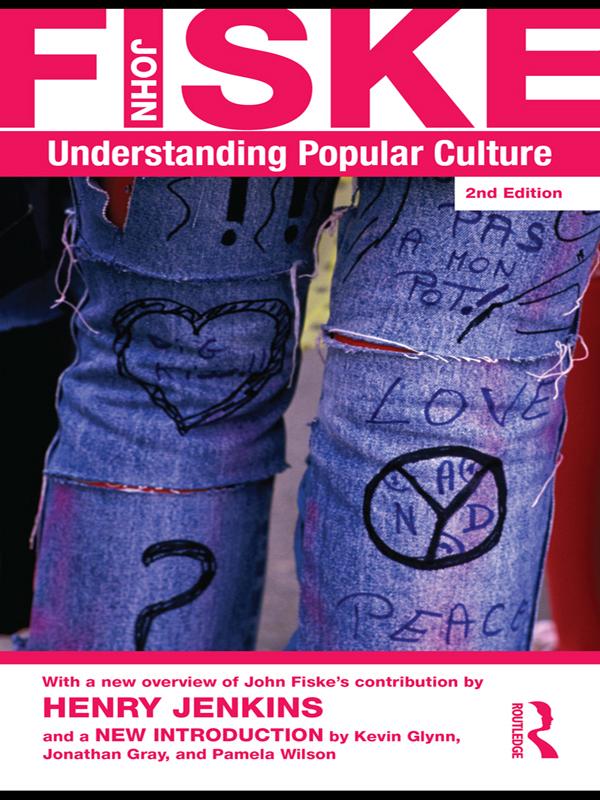
This revised edition of a now classic text includes a new introduction by Henry Jenkins, explaining ‘Why Fiske Still Matters’ for today’s students, followed by a discussion between former Fiske students Kevin Glynn, Jonathan Gray, and Pamela Wilson on the theme of ‘Reading Fiske and Understanding the Popular’. Both underline the continuing relevance of this foundational text in the study of popular culture.
What is popular culture? How does it differ from mass culture? And what do popular "texts" reveal about class, race, and gender dynamics in a society? John Fiske answers these and a host of other questions in Understanding Popular Culture.
When it was first written, Understanding Popular Culture took a groundbreaking approach to studying such cultural artifacts as jeans, shopping malls, tabloid newspapers, and TV game shows, which remains relevant today. Fiske differentiates between mass culture – the cultural "products" put out by an industrialized, capitalist society – and popular culture – the ways in which people use, abuse, and subvert these products to create their own meanings and messages. Rather than focusing on mass culture’s attempts to dominate and homogenize, he prefers to look at (and revel in) popular culture’s evasions and manipulations of these attempts.
Designed as a companion to Reading the Popular, Understanding Popular Culture presents a radically different theory of what it means for culture to be popular: that it is, literally, of the people. It is not imposed on them, it is created by them, and its pleasures and meanings reflect popular tastes and concerns – and a rejection of those fostered by mass culture. With wit, clarity, and insight, Professor Fiske debunks the myth of the mindless mass audience, and demonstrates that, in myriad ways, popular culture thrives because that audience is more aware than anyone guesses.
Pay easily by card, Klarna, Apple Pay or Google Pay. Not happy? You always have a 14-day money-back guarantee. Read more in our terms. If you have any questions, email us at hello@memmo.org.
Memmo makes studying easier – wherever you are in the world. We bring your course books and smart study tools together in one place: summaries, quizzes, podcasts and flashcards. Plus Ted, your study buddy who answers anything you wonder. Over 50,000 students already study here – built to help you learn faster and stress less.