
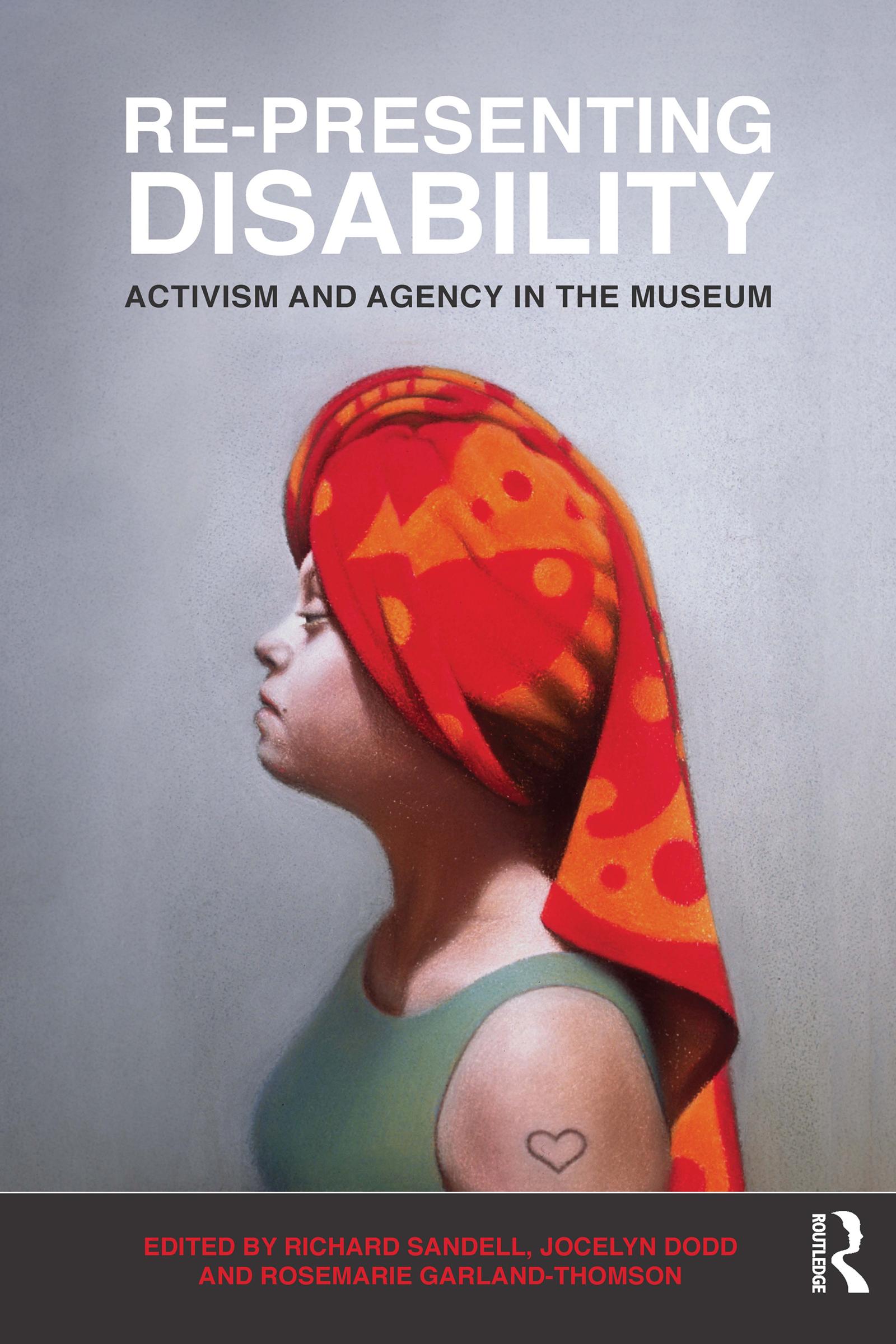
Re-Presenting Disability addresses issues surrounding disability representation in museums and galleries, a topic which is receiving much academic attention and is becoming an increasingly pressing issue for practitioners working in wide-ranging museums and related cultural organisations.
This volume of provocative and timely contributions, brings together twenty researchers, practitioners and academics from different disciplinary, institutional and cultural contexts to explore issues surrounding the cultural representation of disabled people and, more particularly, the inclusion (as well as the marked absence) of disability-related narratives in museum and gallery displays. The diverse perspectives featured in the book offer fresh ways of interrogating and understanding contemporary representational practices as well as illuminating existing, related debates concerning identity politics, social agency and organisational purposes and responsibilities, which have considerable currency within museums and museum studies.
Re-Presenting Disability explores such issues as:
- In what ways have disabled people and disability-related topics historically been represented in the collections and displays of museums and galleries? How can newly emerging representational forms and practices be viewed in relation to these historical approaches?
- How do emerging trends in museum practice – designed to counter prejudiced, stereotypical representations of disabled people – relate to broader developments in disability rights, debates in disability studies, as well as shifting interpretive practices in public history and mass media?
- What approaches can be deployed to mine and interrogate existing collections in order to investigate histories of disability and disabled people and to identify material evidence that might be marshalled to play a part in countering prejudice? What are the implications of these developments for contemporary collecting?
- How might such purposive displays be created and what dilemmas and challenges are curators, educators, designers and other actors in the exhibition-making process, likely to encounter along the way?
- How do audiences – disabled and non-disabled – respond to and engage with interpretive interventions designed to confront, undercut or reshape dominant regimes of representation that underpin and inform contemporary attitudes to disability?
Pay easily by card, Klarna, Apple Pay or Google Pay. Not happy? You always have a 14-day money-back guarantee. Read more in our terms. If you have any questions, email us at hello@memmo.org.
Memmo makes studying easier – wherever you are in the world. We bring your course books and smart study tools together in one place: summaries, quizzes, podcasts and flashcards. Plus Ted, your study buddy who answers anything you wonder. Over 50,000 students already study here – built to help you learn faster and stress less.