
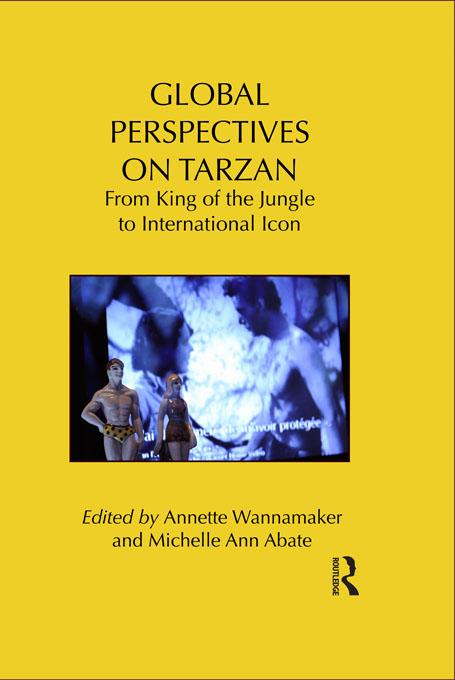
This collection seeks to understand the long-lasting and global appeal of Tarzan: Why is a story about a feral boy, who is raised by apes in the African jungle, so compelling and so adaptable to different cultural contexts and audiences? How is it that the same narrative serves as the basis for both children’s cartoons and lavish musical productions or as a vehicle for both nationalistic discourse and for light romantic fantasy? Considering a history of criticism that highlights the imperialistic, sexist, racist underpinnings of the original Tarzan narrative, why would this character and story appeal to so many readers and viewers around the world? The essays in this volume, written by scholars living and working in Australia, Canada, Israel, The Netherlands, Germany, France and the United States explore these questions using various critical lenses. Chapters include discussions of Tarzan novels, comics, television shows, toys, films, and performances produced or distributed in the U.S., Canada, Israel, Palestine, Britain, India, The Netherlands, Germany and France and consider such topics as imperialism, national identities, language acquisition, adaptation, gender constructions, Tarzan’s influence on child readers and Tarzan’s continued and broad influence on cultures around the world. What emerges, when these pieces are placed into dialogue with one another, is an immensely complex picture of an enduring, multi-faceted global pop culture icon.
Pay easily by card, Klarna, Apple Pay or Google Pay. Not happy? You always have a 14-day money-back guarantee. Read more in our terms. If you have any questions, email us at hello@memmo.org.
Memmo makes studying easier – wherever you are in the world. We bring your course books and smart study tools together in one place: summaries, quizzes, podcasts and flashcards. Plus Ted, your study buddy who answers anything you wonder. Over 50,000 students already study here – built to help you learn faster and stress less.