
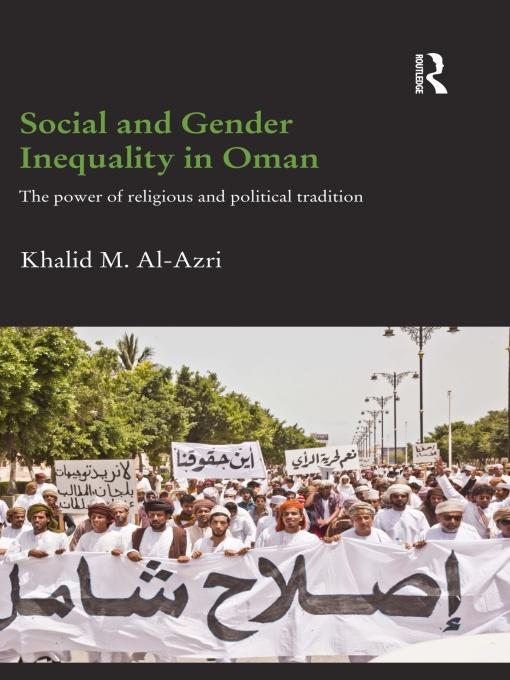
Looking at the social, political and legal changes in Oman since 1970, this book challenges the Islamic and tribal traditional cultural norms relating to marriage, divorce and women’s rights which guide social and legal practice in the modern Omani state. The book argues that despite the establishment of legal instruments guaranteeing equality for all citizens, the fact that the state depends upon Islamic and tribal elites for its legitimacy invalidates these guarantees in practice. Two particular features of the legal and cultural regulation of marriage and marital rights are focused on - the perceived requirement for kafa’a or equality in marriage between so called high and low socio-economic status peoples is examined, and the institution of talaq, which grants greater rights to men than to women in appeals for divorce. This book addresses highly complex subjects with great rigor, in terms of empirical research and engagement with theory, sociological and political as well as theological and legal. It is an interesting investigation of the divisions of authority between the state, Islam and tribal norms, highlighting barriers to reform in both Oman and wider Islamic society, and advocating the removal of such obstacles.
Pay easily by card, Klarna, Apple Pay or Google Pay. Not happy? You always have a 14-day money-back guarantee. Read more in our terms. If you have any questions, email us at hello@memmo.org.
Memmo makes studying easier – wherever you are in the world. We bring your course books and smart study tools together in one place: summaries, quizzes, podcasts and flashcards. Plus Ted, your study buddy who answers anything you wonder. Over 50,000 students already study here – built to help you learn faster and stress less.