
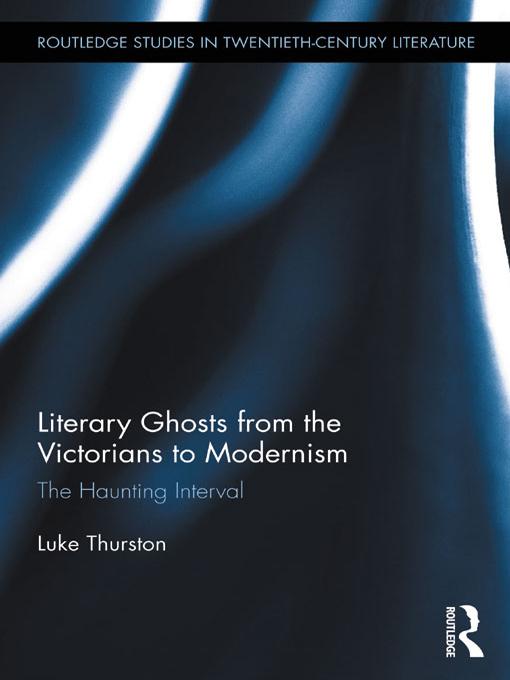
This book resituates the ghost story as a matter of literary hospitality and as part of a vital prehistory of modernism, seeing it not as a quaint neo-gothic ornament, but as a powerful literary response to the technological and psychological disturbances that marked the end of the Victorian era. Linking little-studied authors like M. R. James and May Sinclair to such canonical figures as Dickens, Henry James, Woolf, and Joyce, Thurston argues that the literary ghost should be seen as no mere relic of gothic style but as a portal of discovery, an opening onto the central modernist problem of how to write ‘life itself.’ Ghost stories are split between an ironic, often parodic reference to Gothic style and an evocation of ‘life itself,’ an implicit repudiation of all literary style. Reading the ghost story as both a guest and a host story, this book traces the ghost as a disruptive figure in the ‘hospitable’ space of narrative from Maturin, Poe and Dickens to the fin de siècle, and then on into the twentieth century.
Pay easily by card, Klarna, Apple Pay or Google Pay. Not happy? You always have a 14-day money-back guarantee. Read more in our terms. If you have any questions, email us at hello@memmo.org.
Memmo makes studying easier – wherever you are in the world. We bring your course books and smart study tools together in one place: summaries, quizzes, podcasts and flashcards. Plus Ted, your study buddy who answers anything you wonder. Over 50,000 students already study here – built to help you learn faster and stress less.