
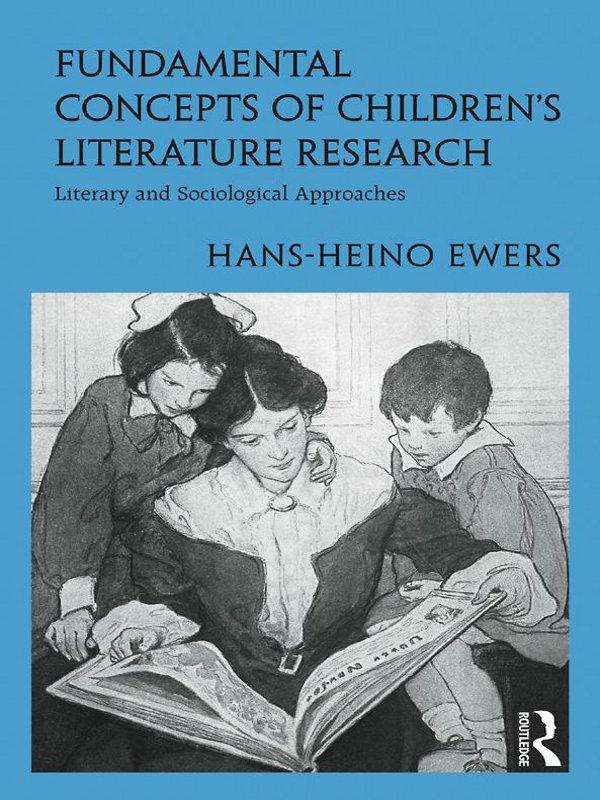
In this book, Ewers provides students and professors with a new system of categorization for a differentiated description of children’s literature. In the early 1970s, Swedish children’s literature scholar Göte Kingberg worked to establish a system of scientific terminology for international use, but these terms are now somewhat antiquated. This book offers a much-needed update, systematically analyzing the field and articulating its key definitions, terms, and concepts.
International in scope, this study touches on subjects including the distribution of primers and textbooks, the means by which children’s books are evaluated and classified, and the ways in which children’s literature can find an adult audience. Also discussed are the system of symbols, norms, concepts, and discourses that have evolved during the past two centuries, leading to an investigation of how authors and publishers have endeavored to make literature "appropriate" for children and of what it means to accommodate children’s needs, wishes, and values. Throughout, Ewers provides concrete examples and clear definitions of terms so that any scholar interested in children’s literature will find this book approachable, insightful, and one that crosses cultural boundaries.
Pay easily by card, Klarna, Apple Pay or Google Pay. Not happy? You always have a 14-day money-back guarantee. Read more in our terms. If you have any questions, email us at hello@memmo.org.
Memmo makes studying easier – wherever you are in the world. We bring your course books and smart study tools together in one place: summaries, quizzes, podcasts and flashcards. Plus Ted, your study buddy who answers anything you wonder. Over 50,000 students already study here – built to help you learn faster and stress less.