
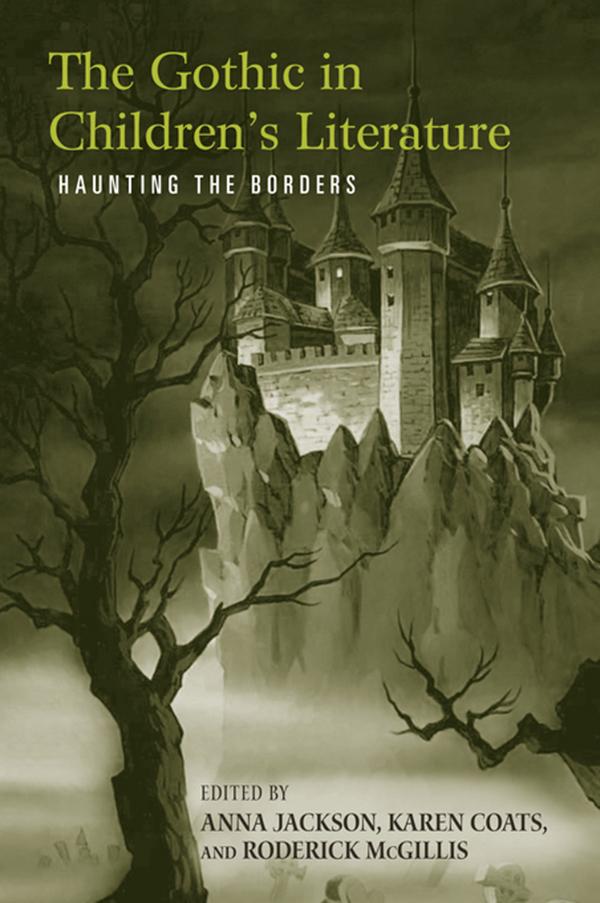
From creepy picture books to Harry Potter, Lemony Snicket, the Spiderwick Chronicles, and countless vampire series for young adult readers, fear has become a dominant mode of entertainment for young readers. The last two decades have seen an enormous growth in the critical study of two very different genres, the Gothic and children’s literature.
The Gothic, concerned with the perverse and the forbidden, with adult sexuality and religious or metaphysical doubts and heresies, seems to represent everything that children’s literature, as a genre, was designed to keep out. Indeed, this does seem to be very much the way that children’s literature was marketed in the late eighteenth century, at exactly the same time that the Gothic was really taking off, written by the same women novelists who were responsible for the promotion of a safe and segregated children’s literature.
This collection examines the early intersection of the Gothic and children’s literature and the contemporary manifestations of the gothic impulse, revealing that Gothic elements can, in fact, be traced in children’s literature for as long as children have been reading.
Pay easily by card, Klarna, Apple Pay or Google Pay. Not happy? You always have a 14-day money-back guarantee. Read more in our terms. If you have any questions, email us at hello@memmo.org.
Memmo makes studying easier – wherever you are in the world. We bring your course books and smart study tools together in one place: summaries, quizzes, podcasts and flashcards. Plus Ted, your study buddy who answers anything you wonder. Over 50,000 students already study here – built to help you learn faster and stress less.