
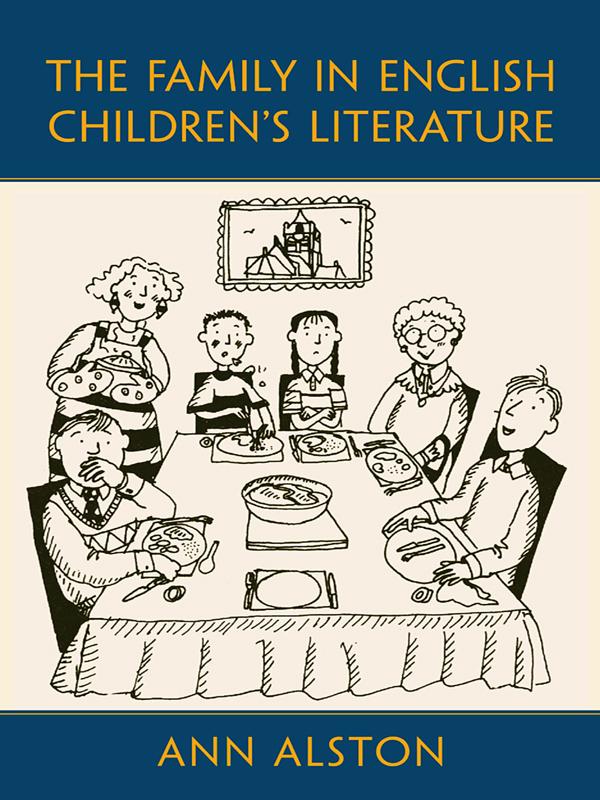
From the trials of families experiencing divorce, as in Anne Fine’s Madame Doubtfire, to the childcare problems highlighted in Jacqueline Wilson’s Tracy Beaker, it might seem that the traditional family and the ideals that accompany it have long vanished. However, in The Family in English Children’s Literature, Ann Alston argues that this is far from the case. She suggests that despite the tales of family woe portrayed in children’s literature, the desire for the happy, contented nuclear family remains inherent within the ideological subtexts of children’s literature. Using 1818 as a starting point, Alston investigates families in children’s literature at their most intimate, focusing on how they share their spaces, their ideals of home, and even on what they eat for dinner. What emerges from Alston’s study are not so much the contrasts that exist between periods, but rather the startling similarities of the ideology of family intrinsic to children’s literature. The Family in English Children’s Literature sheds light on who maintains control, who behaves, and how significant children’s literature is in shaping our ideas about what makes a family "good."
Pay easily by card, Klarna, Apple Pay or Google Pay. Not happy? You always have a 14-day money-back guarantee. Read more in our terms. If you have any questions, email us at hello@memmo.org.
Memmo makes studying easier – wherever you are in the world. We bring your course books and smart study tools together in one place: summaries, quizzes, podcasts and flashcards. Plus Ted, your study buddy who answers anything you wonder. Over 50,000 students already study here – built to help you learn faster and stress less.