
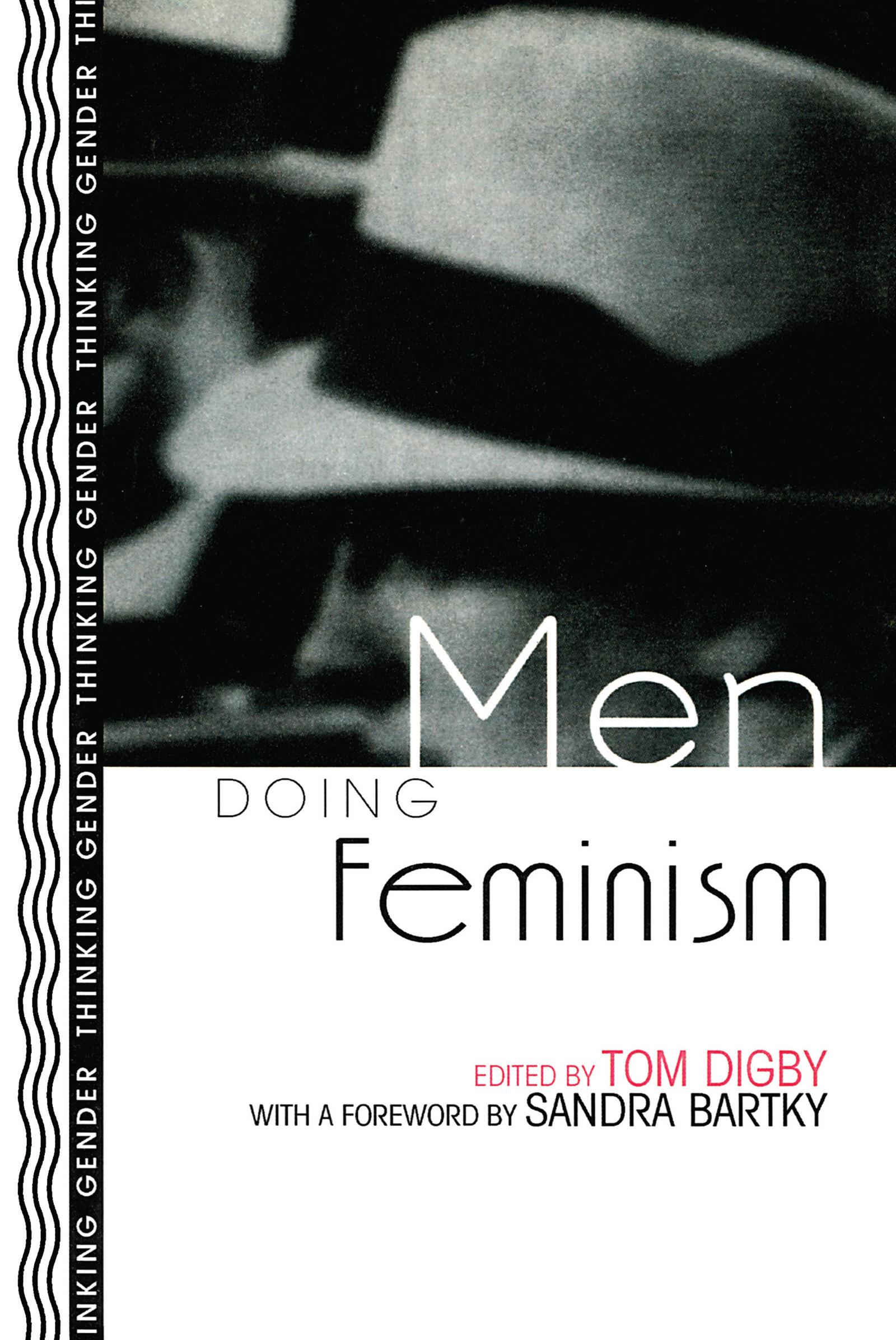
The relation between feminism and men is often presumed to be antagonistic, so that men are expected to resist feminism, and feminists are assumed to hate men. That pattern of opposition is disrupted, however, by the continually increasing numbers of men who are participating in feminist theory and practice, trying to integrate feminist perspectives into their scholarship, teaching, work, play, friendships, and romantic involvements. Responses to this male feminism have varied. Sometimes male feminists find some female feminists critical of men who oppose or decline to join feminist projects, but also rebuff the few men who do undertake feminist projects. On the other hand, some women feminists have unequivocally welcomed men as allies in political, business, religious, and academic contexts. The essays in Men Doing Feminism reveal that there is justification for both views, the skeptical and the enthusiastic, because feminist men are as diverse as feminist women.
Many of the eighteen contributors to this book--women, men, blacks, whites, gays, straights, transsexuals--use personal narrative to show ways that men's lives can shape their approaches to doing feminism and to convey the opportunities and challenges involved in integrating feminism into a man's life. Some authors argue that men's experiences prepare them to make contributions that are of crucial importance to feminist theory. Others argue that men must radically reform, or even abandon manhood and masculinity if they are to be feminists.
In Men Doing Feminism, feminist theory is used to illuminate men's lives, and men's lives serve as a basis for feminist theory.
Contributors: Michael Awkward, Susan Bordo, Harry Brod, Tom Digby, Judith K. Gardiner, C. Jacob Hale, Sandra Harding, Patrick Hopkins, Joy James, David Kahane, Michael Kimmel, Gary Lemons, Larry May, Brian Pronger, Henry Rubin, Richard Schmitt, James P. Sterba, Laurence Mordekhai Thomas, and Thomas E. Wartenberg.
Pay easily by card, Klarna, Apple Pay or Google Pay. Not happy? You always have a 14-day money-back guarantee. Read more in our terms. If you have any questions, email us at hello@memmo.org.
Memmo makes studying easier – wherever you are in the world. We bring your course books and smart study tools together in one place: summaries, quizzes, podcasts and flashcards. Plus Ted, your study buddy who answers anything you wonder. Over 50,000 students already study here – built to help you learn faster and stress less.