
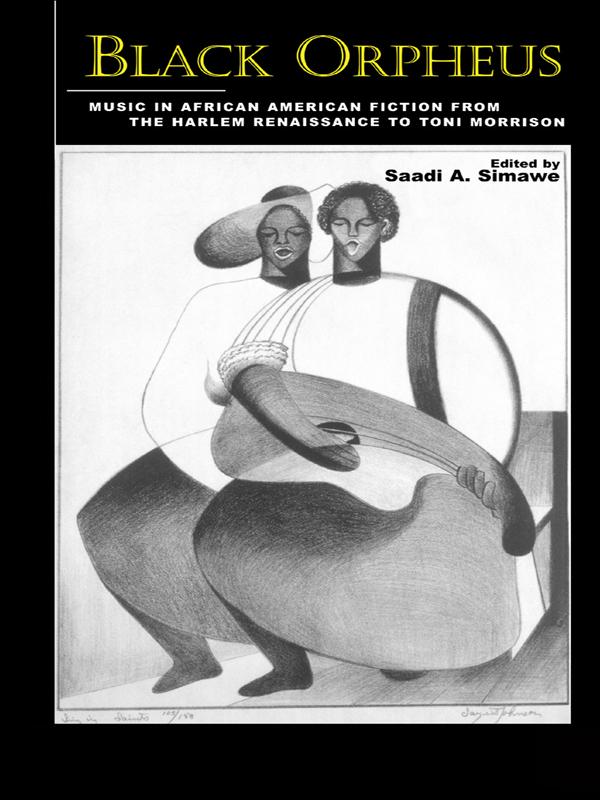
The legendary Greek figure Orpheus was said to have possessed magical powers capable of moving all living and inanimate things through the sound of his lyre and voice. Over time, the Orphic theme has come to indicate the power of music to unsettle, subvert, and ultimately bring down oppressive realities in order to liberate the soul and expand human life without limits. The liberating effect of music has been a particularly important theme in twentieth-century African American literature.
The nine original essays in Black Orpheus examines the Orphic theme in the fiction of such African American writers as Jean Toomer, Langston Hughes, Claude McKay, James Baldwin, Nathaniel Mackey, Sherley Anne Williams, Ann Petry, Ntozake Shange, Alice Walker, Gayl Jones, and Toni Morrison. The authors discussed in this volume depict music as a mystical, shamanistic, and spiritual power that can miraculously transform the realities of the soul and of the world. Here, the musician uses his or her music as a weapon to shield and protect his or her spirituality. Written by scholars of English, music, women’s studies, American studies, cultural theory, and black and Africana studies, the essays in this interdisciplinary collection ultimately explore the thematic, linguistic structural presence of music in twentieth-century African American fiction.
Pay easily by card, Klarna, Apple Pay or Google Pay. Not happy? You always have a 14-day money-back guarantee. Read more in our terms. If you have any questions, email us at hello@memmo.org.
Memmo makes studying easier – wherever you are in the world. We bring your course books and smart study tools together in one place: summaries, quizzes, podcasts and flashcards. Plus Ted, your study buddy who answers anything you wonder. Over 50,000 students already study here – built to help you learn faster and stress less.