
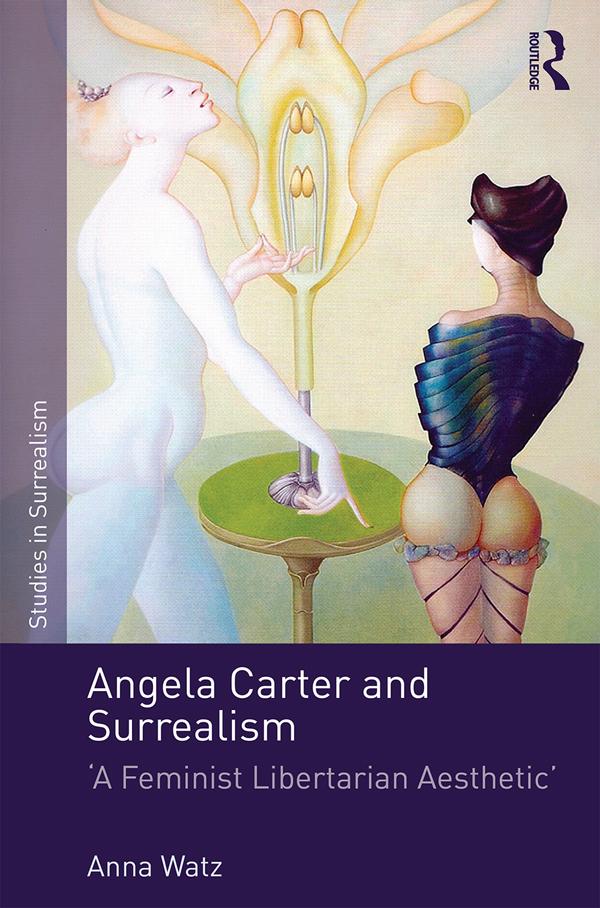
In 1972, Angela Carter translated Xavière Gauthier’s ground-breaking feminist critique of the surrealist movement, Surréalisme et sexualité (1971). Although the translation was never published, the project at once confirmed and consolidated Carter’s previous interest in surrealism, representation, gender and desire and aided her formulation of a new surrealist-feminist aesthetic. Carter’s sustained engagement with surrealist aesthetics and politics as well as surrealist scholarship aptly demonstrates what is at stake for feminism at the intersection of avant-garde aesthetics and the representation of women and female desire. Drawing on previously unexplored archival material, such as typescripts, journals, and letters, Anna Watz’s study is the first to trace the full extent to which Carter’s writing was influenced by the surrealist movement and its critical heritage. Watz’s book is an important contribution to scholarship on Angela Carter as well as to contemporary feminist debates on surrealism, and will appeal to scholars across the fields of contemporary British fiction, feminism, and literary and visual surrealism.
Pay easily by card, Klarna, Apple Pay or Google Pay. Not happy? You always have a 14-day money-back guarantee. Read more in our terms. If you have any questions, email us at hello@memmo.org.
Memmo makes studying easier – wherever you are in the world. We bring your course books and smart study tools together in one place: summaries, quizzes, podcasts and flashcards. Plus Ted, your study buddy who answers anything you wonder. Over 50,000 students already study here – built to help you learn faster and stress less.