
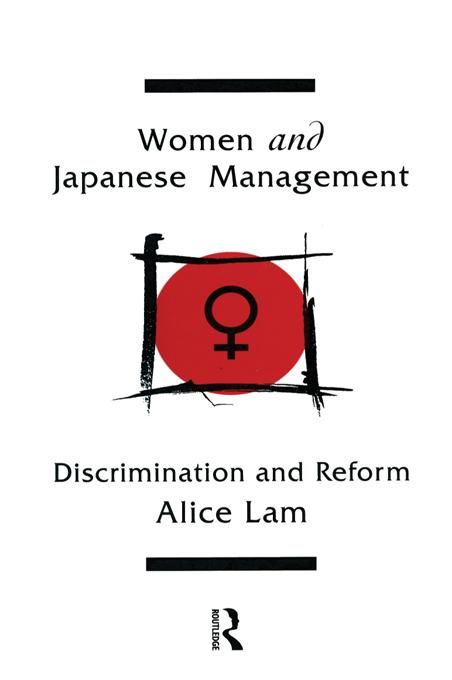
Standard works on the employment systems of Japanese companies deal almost exclusively with men. Women, however, constitute the vast majority of the low wage, highly flexible "non-core" employees.
This book breaks new ground in examining the role of Japanese women in industry. It assesses the extent to which growing pressure for equal opportunities between the sexes has caused Japanese companies to adapt their employment and personnel management practices in recent years.
The author puts the argument in an historical perspective, covering the employment of Japanese women from the start of Japan's industrialisation up to the turning point of the 1986 Equal Employment Opportunity (EEO) Law. She examines the background and execution of the legislation and she looks at the response of the business community. In her case study of the Seibu department store, which takes up the final part of the book, Lam concludes that the EEO Law has not had the desired effect.
Pay easily by card, Klarna, Apple Pay or Google Pay. Not happy? You always have a 14-day money-back guarantee. Read more in our terms. If you have any questions, email us at hello@memmo.org.
Memmo makes studying easier – wherever you are in the world. We bring your course books and smart study tools together in one place: summaries, quizzes, podcasts and flashcards. Plus Ted, your study buddy who answers anything you wonder. Over 50,000 students already study here – built to help you learn faster and stress less.
You might also like
Buy the book0