
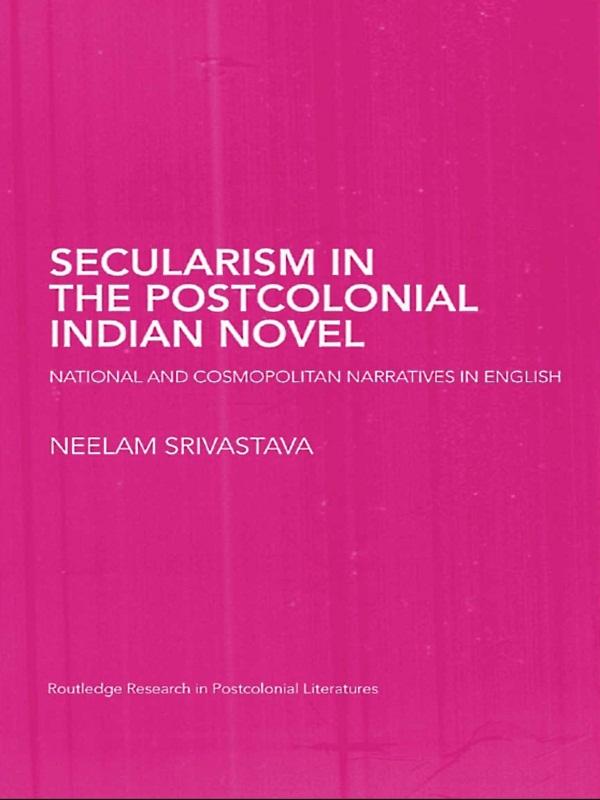
This study explores the connections between a secular Indian nation and fiction in English by a number of postcolonial Indian writers of the 1980s and 90s. Examining writers such as Vikram Seth, Salman Rushdie, Amitav Ghosh, Shashi Tharoor, and Rohinton Mistry, with particularly close readings of Midnight‘s Children, A Suitable Boy, The Shadow Lines and The Satanic Verses, Neelam Srivastava investigates different aspects of postcolonial identity within the secular framework of the Anglophone novel. The book traces the breakdown of the Nehruvian secular consensus between 1975 and 2005 through these narratives of postcolonial India. In particular, it examines how these writers use the novel form to re-write colonial and nationalist versions of Indian history, and how they radically reinvent English as a secular language for narrating India. Ultimately, it delineates a common conceptual framework for secularism and cosmopolitanism, by arguing that Indian secularism can be seen as a located, indigenous form of a cosmopolitan identity.
Pay easily by card, Klarna, Apple Pay or Google Pay. Not happy? You always have a 14-day money-back guarantee. Read more in our terms. If you have any questions, email us at hello@memmo.org.
Memmo makes studying easier – wherever you are in the world. We bring your course books and smart study tools together in one place: summaries, quizzes, podcasts and flashcards. Plus Ted, your study buddy who answers anything you wonder. Over 50,000 students already study here – built to help you learn faster and stress less.
You might also like
Buy the book0