
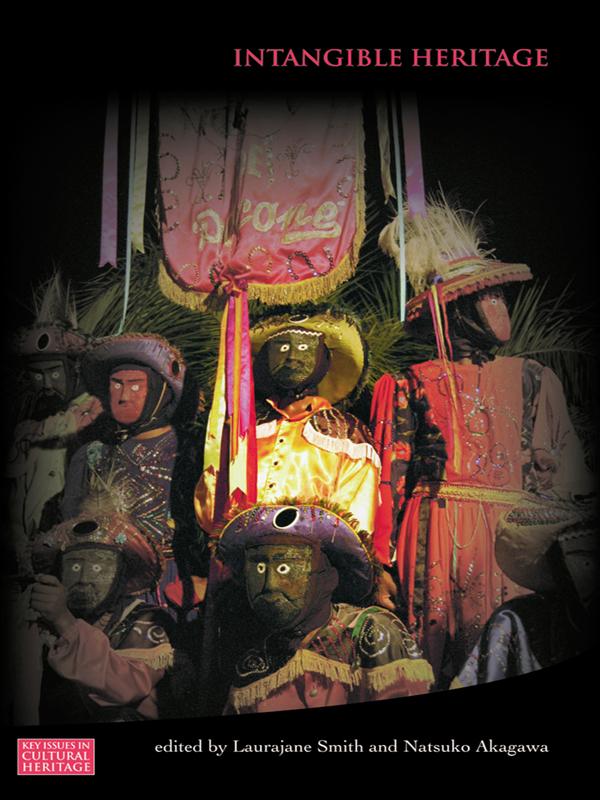
This volume examines the implications and consequences of the idea of ‘intangible heritage’ to current international academic and policy debates about the meaning and nature of cultural heritage and the management processes developed to protect it. It provides an accessible account of the different ways in which intangible cultural heritage has been defined and managed in both national and international contexts, and aims to facilitate international debate about the meaning, nature and value of not only intangible cultural heritage, but heritage more generally.
Intangible Heritage fills a significant gap in the heritage literature available and represents a significant cross section of ideas and practices associated with intangible cultural heritage. The authors brought together for this volume represent some of the key academics and practitioners working in the area, and discuss research and practices from a range of countries, including: Zimbabwe, Morocco, South Africa, Japan, Australia, United Kingdom, the Netherlands, USA, Brazil and Indonesia, and bring together a range of areas of expertise which include anthropology, law, heritage studies, archaeology, museum studies, folklore, architecture, Indigenous studies and history.
Pay easily by card, Klarna, Apple Pay or Google Pay. Not happy? You always have a 14-day money-back guarantee. Read more in our terms. If you have any questions, email us at hello@memmo.org.
Memmo makes studying easier – wherever you are in the world. We bring your course books and smart study tools together in one place: summaries, quizzes, podcasts and flashcards. Plus Ted, your study buddy who answers anything you wonder. Over 50,000 students already study here – built to help you learn faster and stress less.