
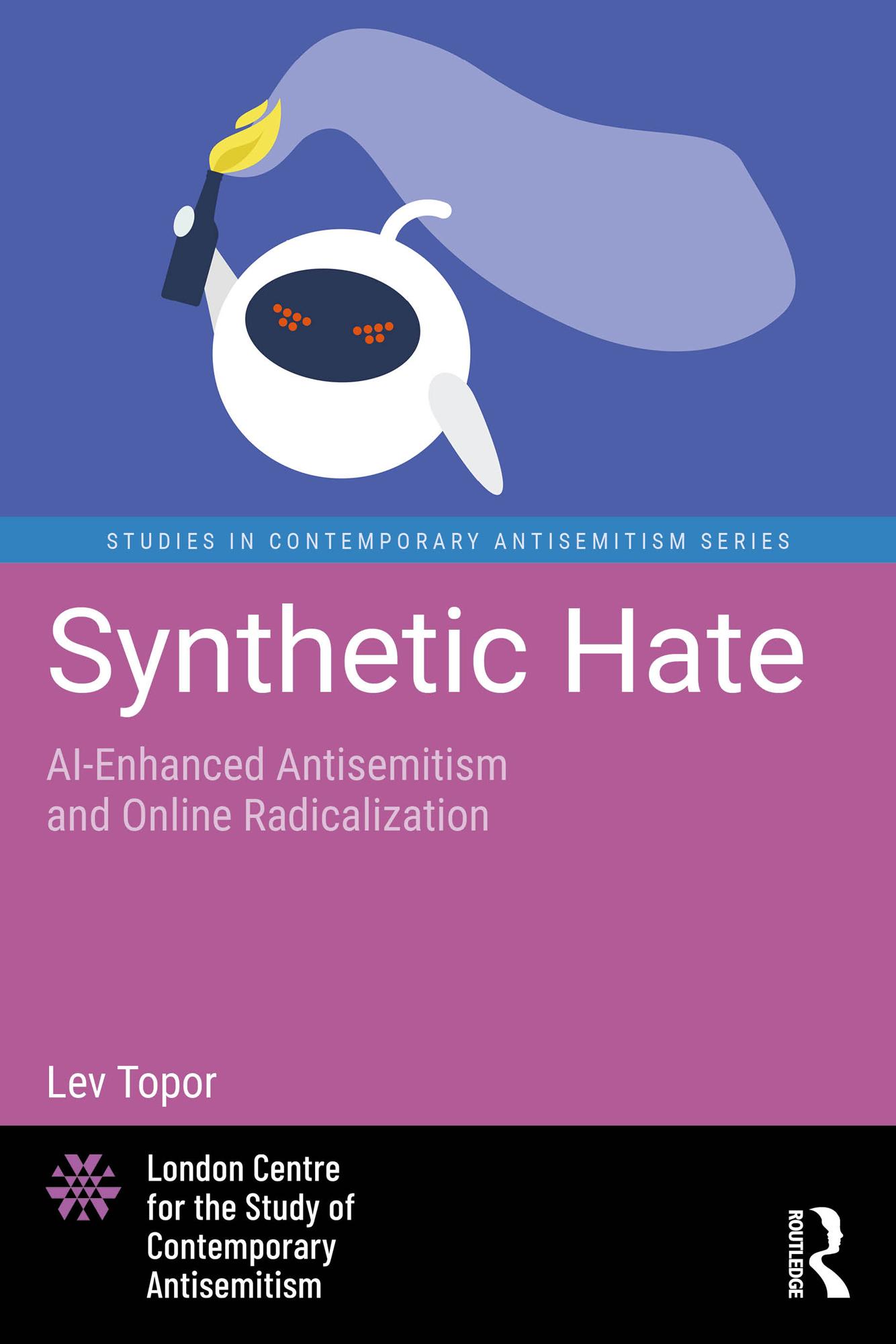
Synthetic Hate investigates how extremists exploit artificial intelligence (AI) to modernize the world’s oldest hatred. Antisemitism – rooted in religious discrimination, medieval blood libels, Nazi propaganda, and contemporary Islamist and far-right conspiracies – has found new life through generative tools that can produce persuasive text, images, audio, and video at scale.
Drawing on documented cases and controlled demonstrations, the book shows how large language models (LLMs), deepfakes, bots, and recommendation systems enable cheap, rapid, and adaptive propaganda – memes that evade moderation, fabricated “evidence,” synthetic voices, and narrative laundering that spreads across platforms and into mainstream feeds. The result is not “new” hate, but hate that is faster, more convincing, and harder to police.
Crucially, Synthetic Hate goes beyond diagnosis, and it lays out a practical counterstrategy of technical safeguards, platform accountability and regulation, and education and resilience, so policymakers, researchers, and practitioners can blunt AI-amplified antisemitism and hate without sacrificing democratic values.
Pay easily by card, Klarna, Apple Pay or Google Pay. Not happy? You always have a 14-day money-back guarantee. Read more in our terms. If you have any questions, email us at hello@memmo.org.
Memmo makes studying easier – wherever you are in the world. We bring your course books and smart study tools together in one place: summaries, quizzes, podcasts and flashcards. Plus Ted, your study buddy who answers anything you wonder. Over 50,000 students already study here – built to help you learn faster and stress less.